The abject feminine, in a week Paris took to the streets
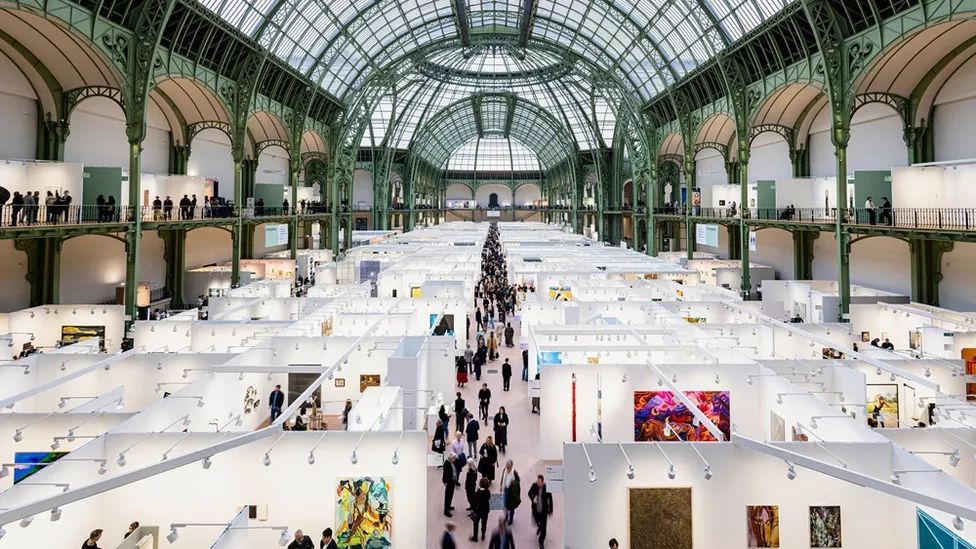
Art Basel Paris 2026 closed on Friday at 7pm, two days early, citing “potential demonstrations across Paris and concerns for visitor safety” (Artsy). The weekend before, more than half a million people had marched across France over the cost of living, fuel prices and declining public services (Reuters). The fair had already reinforced security around the Grand Palais, and by Thursday a post in French was calling people to gather “against Art Basel” (ArtReview).
Julia Kristeva located the abject in whatever “disturbs identity, system, order. What does not respect borders, positions, rules.”¹ The abject is what spills over: the inside that will not stay inside. In
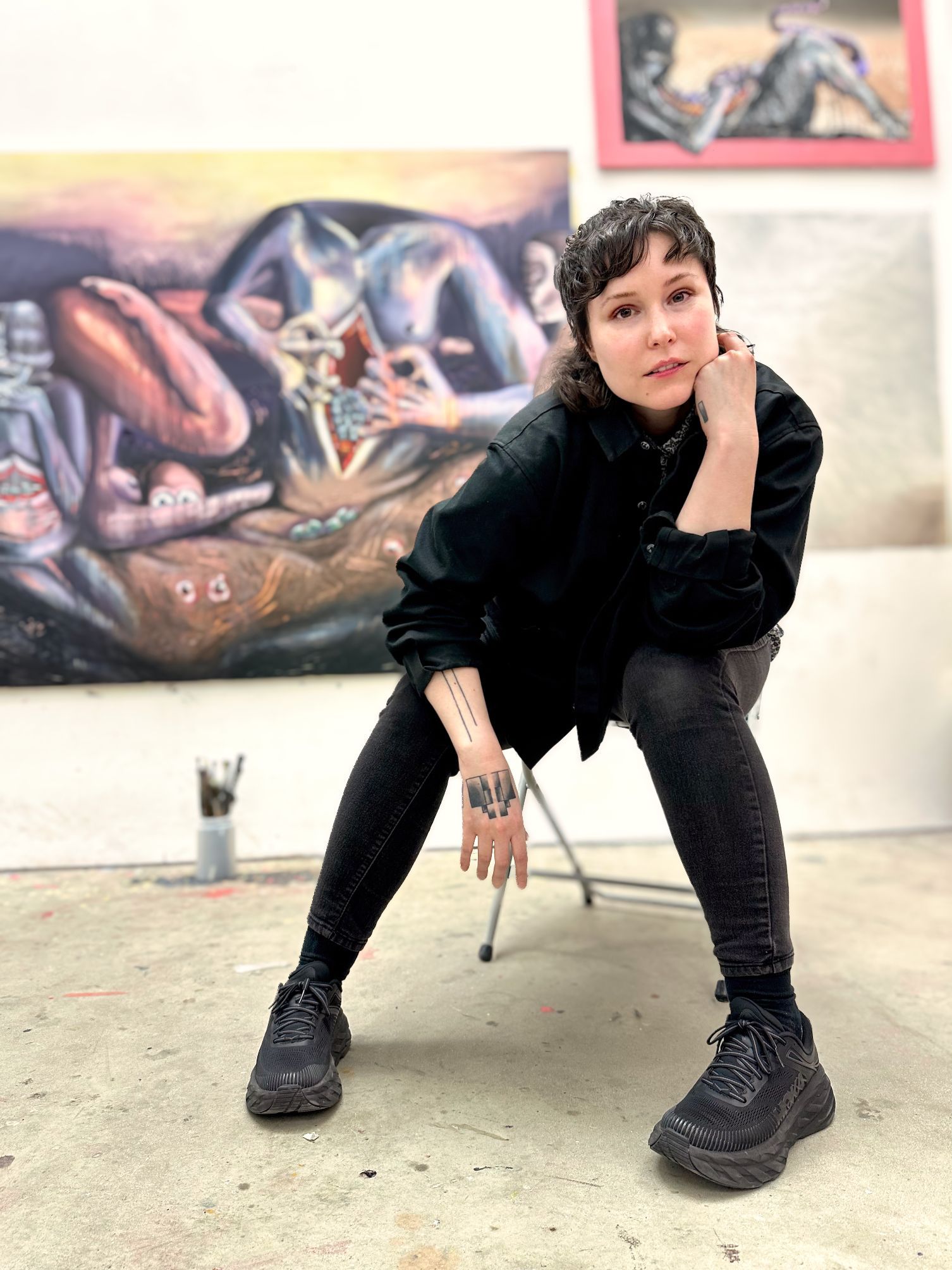
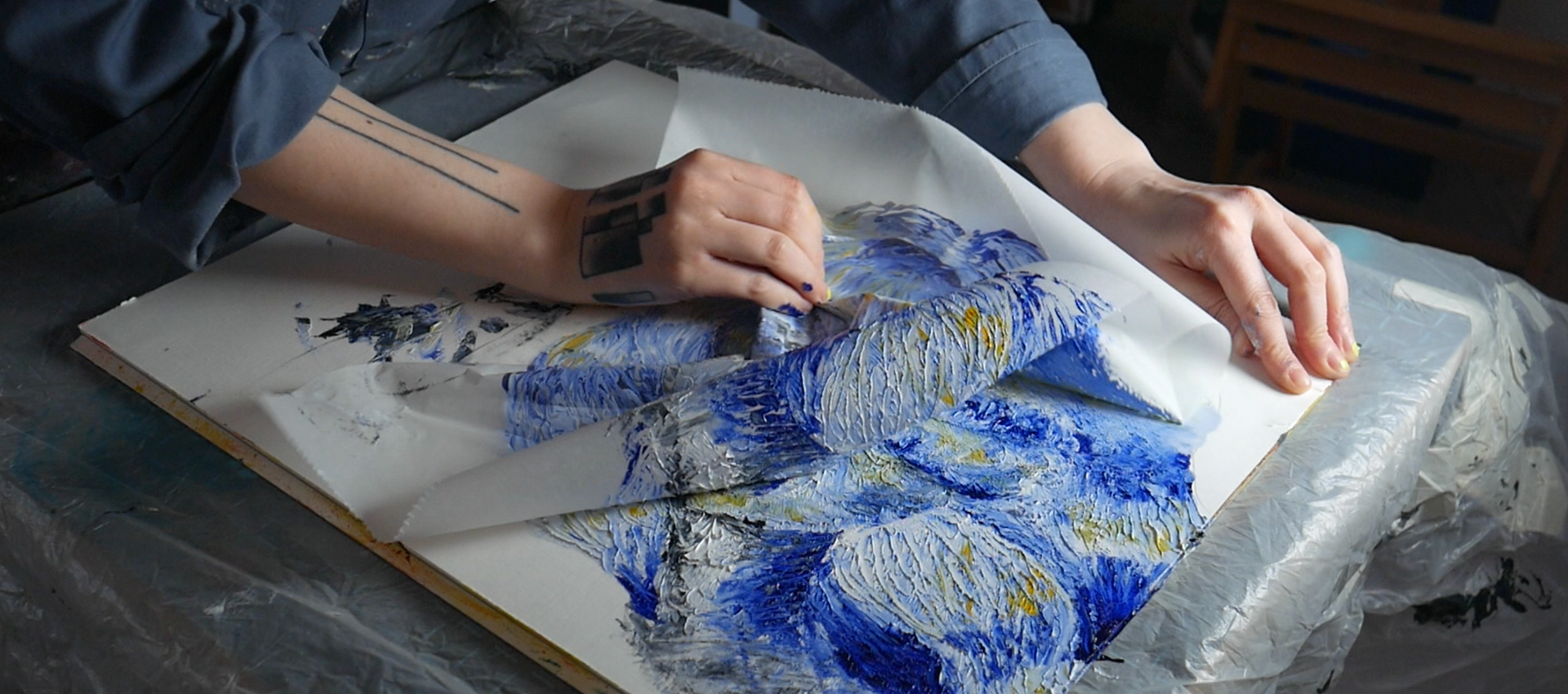
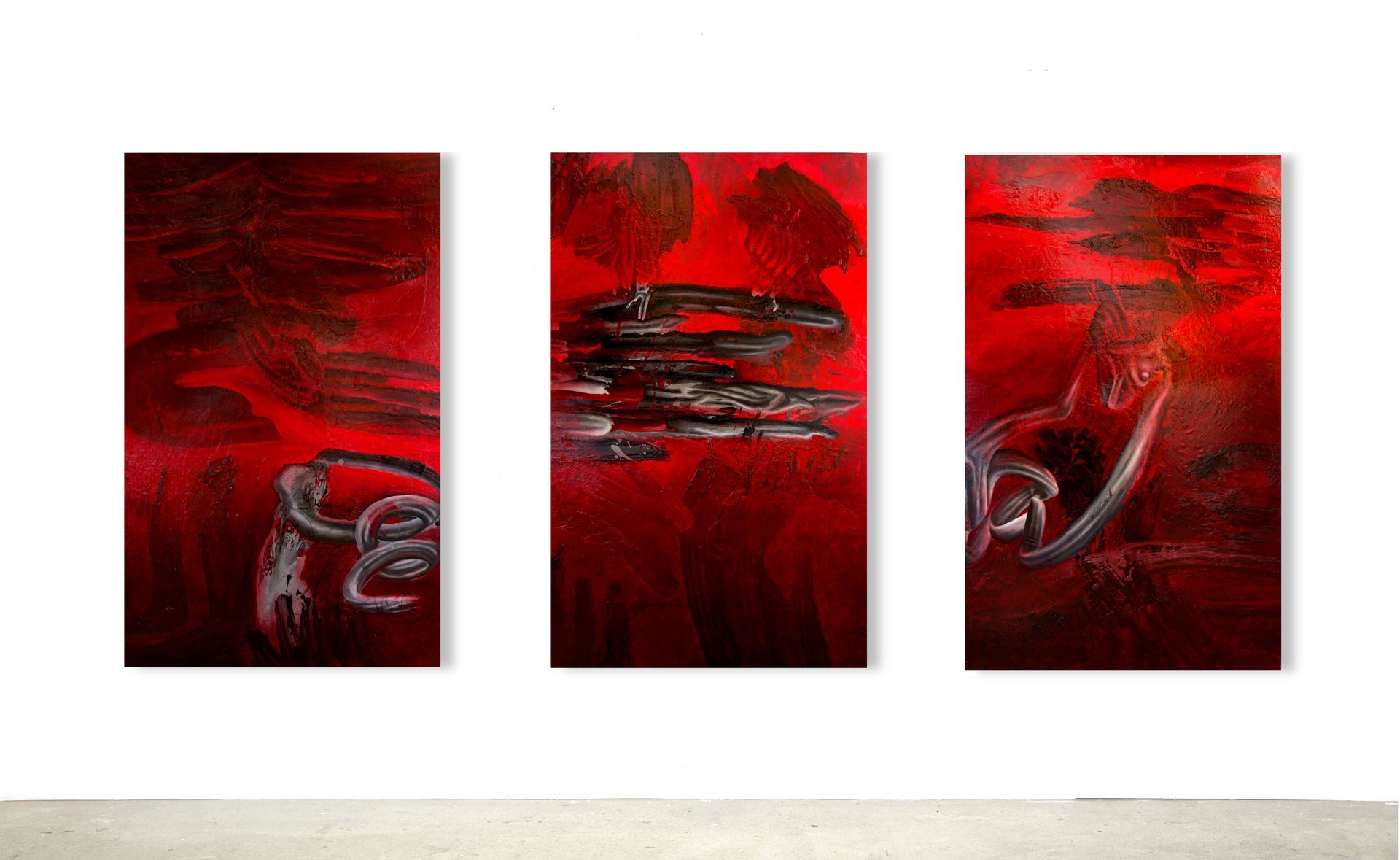
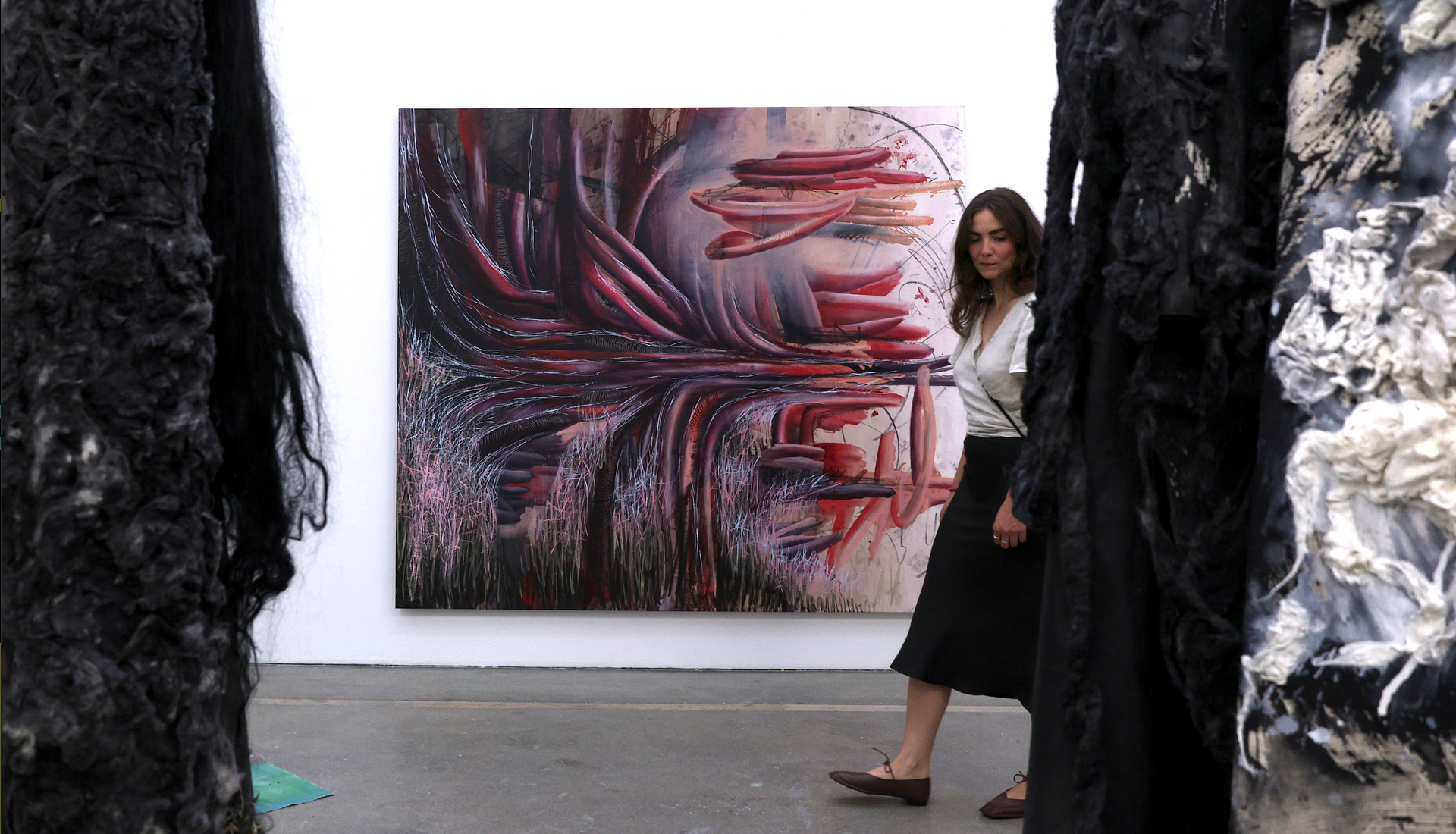
my own painting, I have developed the abject feminine as a line of inquiry: the body seen from the inside, unstable, never allowed to settle. The nine artists below each evoke a body that refuses to stay inside its edges.
Bodies That Refuse Their Limits: The Abject Feminine at Art Basel Paris 2026
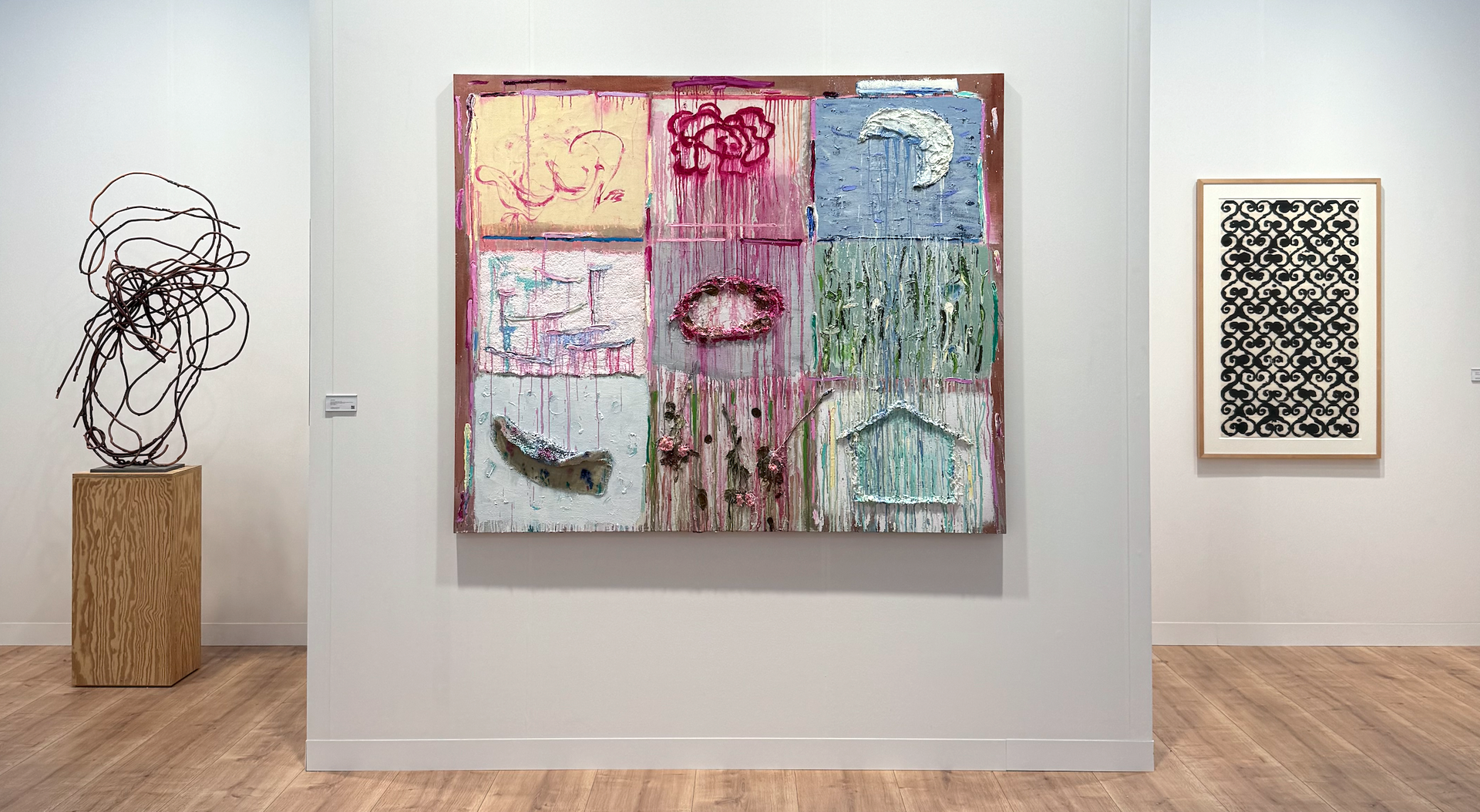
1. Joan Snyder, Luhring Augustine
Snyder spent the 1970s forcing bodily, emotional marks into the grid of Minimalism. Since then her canvases have filled with what grows and rots: mud, straw, seeds, dried flowers, burlap, papier-mâché pouches swelling off the surface. Her vocabulary of breasts, moons, ponds and roses comes from women's lived experience. On Luhring Augustine's stand, her surfaces held matter in the middle of decay and regrowth, the stuff Kristeva's abject is made of, and made the case that the abject feminine can be tender.
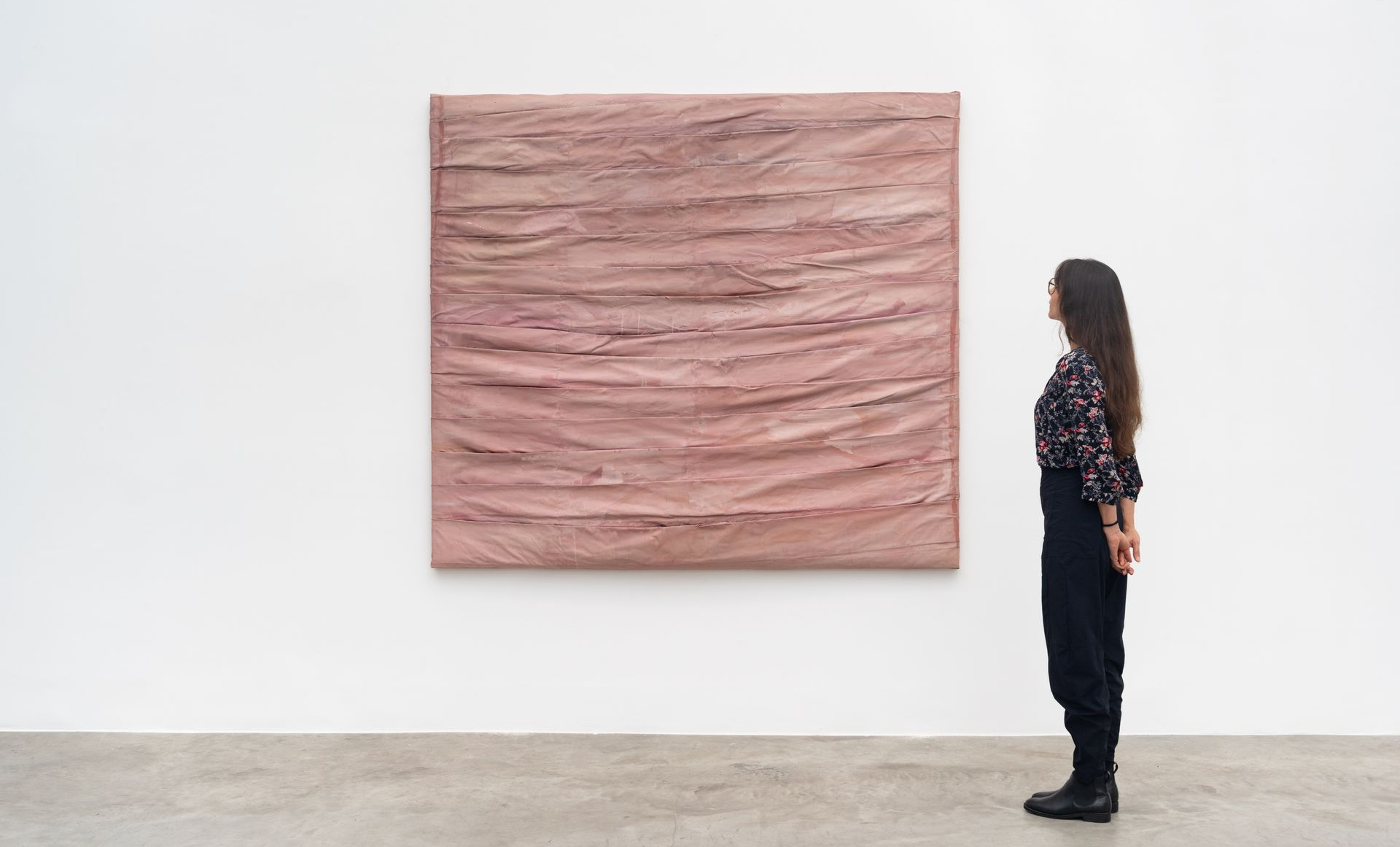
2. Leda Catunda, Fortes D'Aloia & Gabriel
Dobras (1997) folds a canvas horizontally onto itself in pinks, so it reads as skin before it reads as an image. Real shadows from the folds fall over painted ones, and depth becomes impossible to locate. The body is never depicted. The whole surface is body anyway, heavy enough to sag, partly hidden and partly offered. Catunda gives the abject feminine an anatomy of folds: flesh that sags, creases, and shows its weight where the ideal body is smooth.
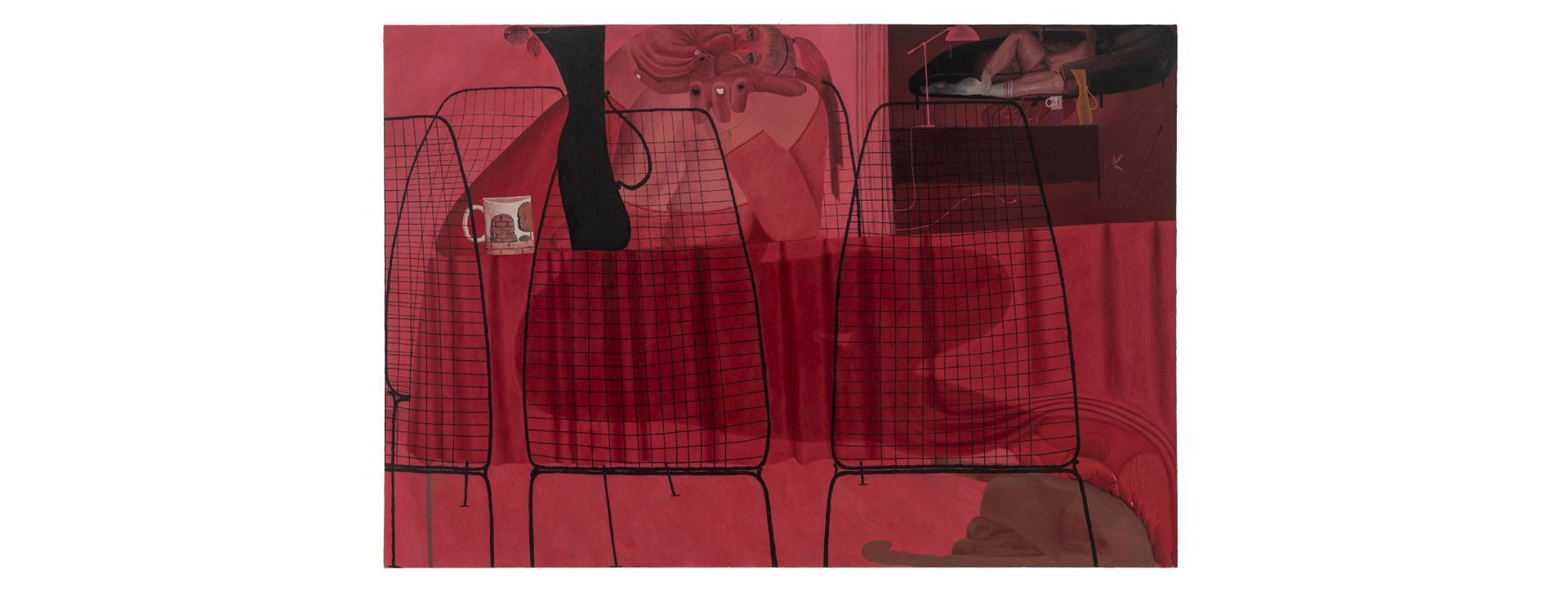
3. Celeste Rapone, Esther Schipper
Rapone's women are too big for their paintings. In Splinter (2026), as across her work, figures press against the edges of the canvas and bodies hold positions no anatomy permits. The frame works as a corset. The humour in her figures is real, and it runs on a pressure most women recognise: the expectation to fit. Kristeva's abject is what will not keep to its position, and Rapone's women never do.
4. Carolee Schneemann, P·P·O·W
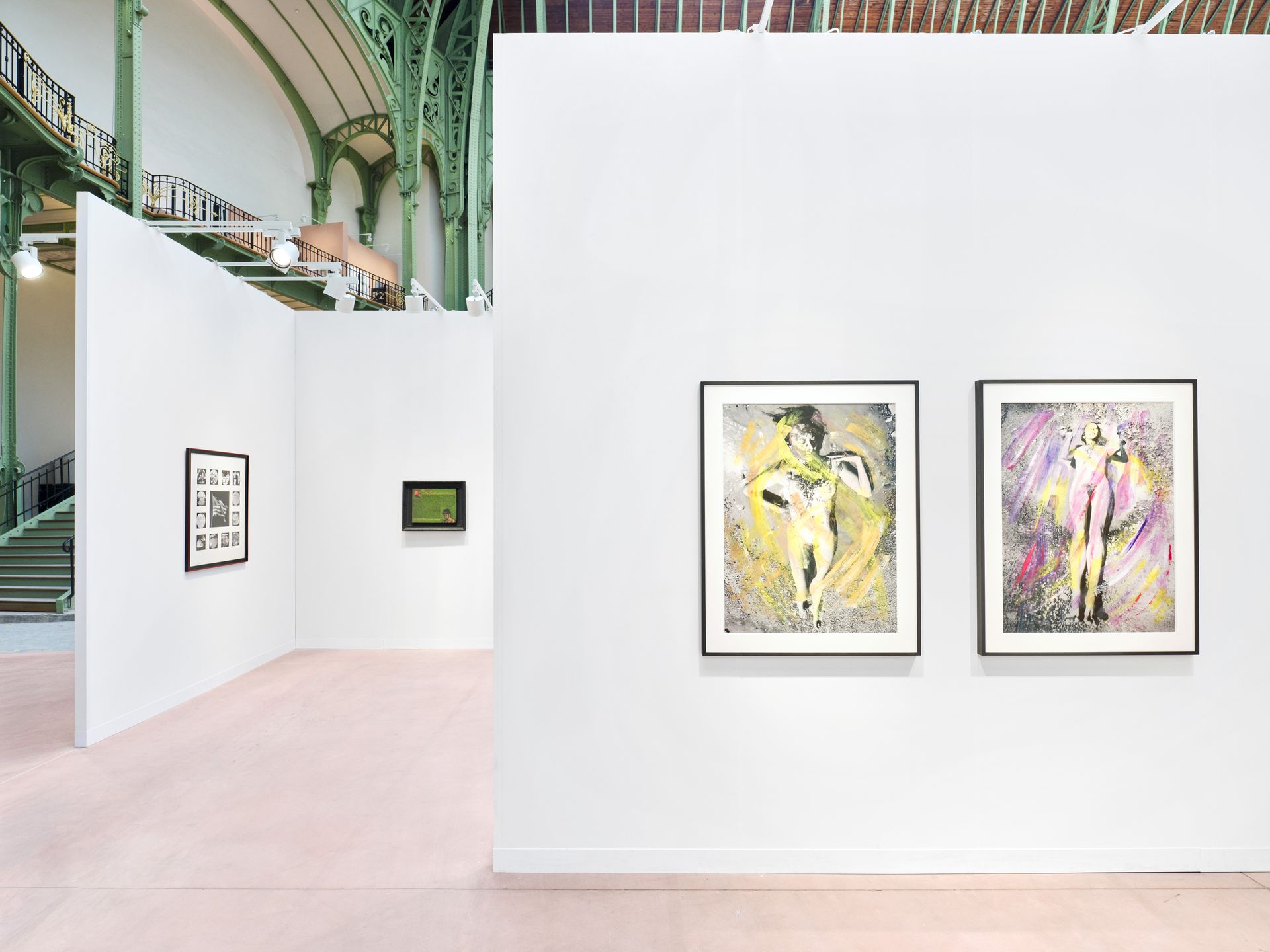
Schneemann is the elder of this list, and the source of much of it. Her Evaporation works (1974/2016) are photographs of her body given over to light and water, which she painted over four decades after printing them: body into landscape, landscape into image, image back into the hand. The skin stops working as a border, which is exactly where the abject feminine begins. A year later, in Interior Scroll (1975), she drew a paper scroll from her vagina and read its text aloud, making the inside of the body the place language comes from. She trained in Abstract Expressionism, turned away from its masculine heroism, and still insisted: "I'm a painter. I'm still a painter and I will die a painter."
5. Clémence Gbonon, Mariane Ibrahim
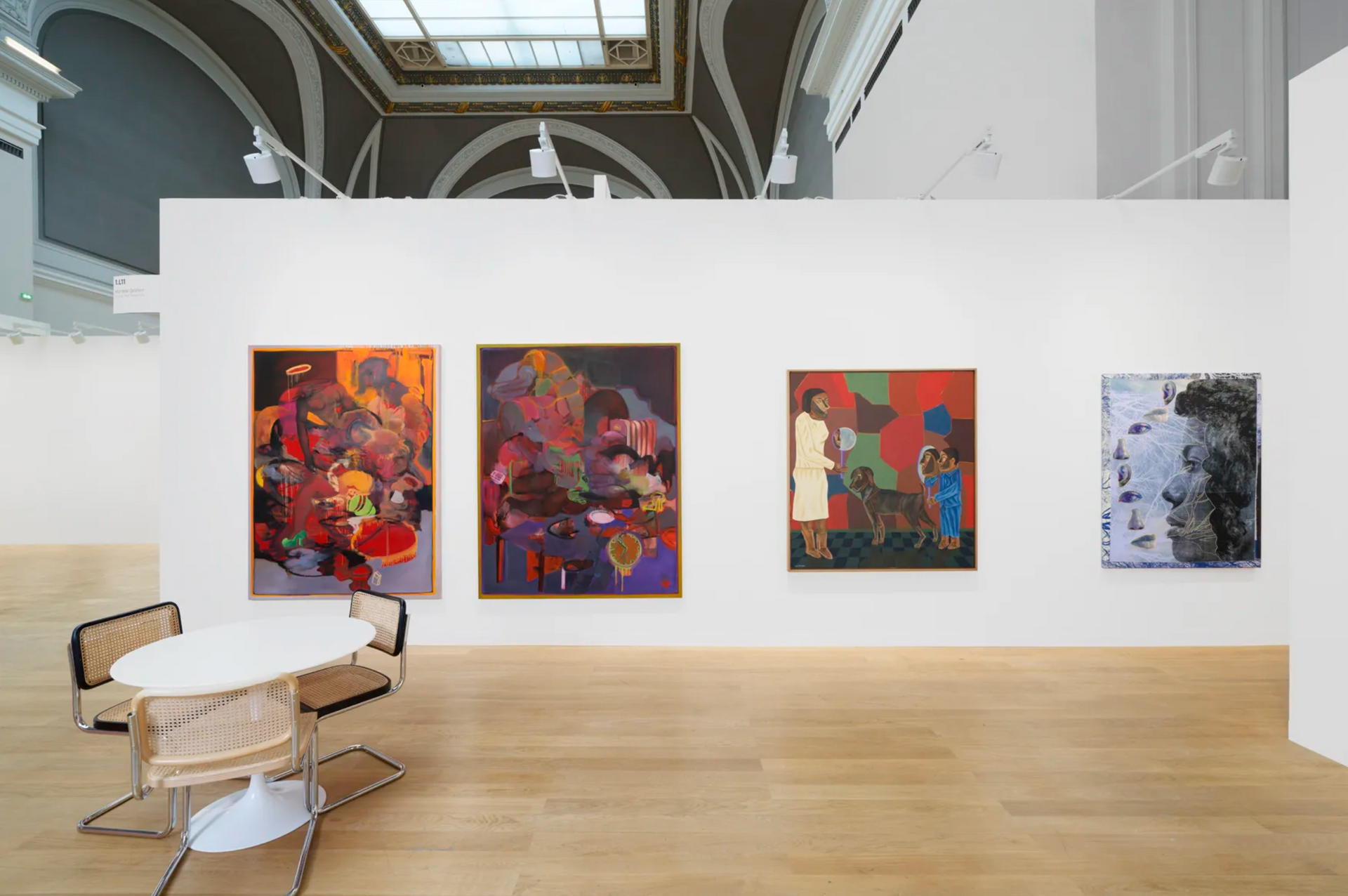
Born in 1994 and a 2024 graduate of the Beaux-Arts de Paris, Gbonon is the youngest artist on this list and the only one based in Paris. Her bulbous forms and dripping lines register bodily and psychic gesture; figures strain, fragment and dissolve. She describes her compositions as a "junkyard" logic where sentimental, utilitarian and discarded things collide. The discarded is Kristeva's exact territory: what a system expels and cannot stop seeing. In Gbonon's paintings, the abject feminine becomes a whole cosmology, bodies and debris sharing one unstable surface.
6. Sabine Moritz, Galerie Max Hetzler
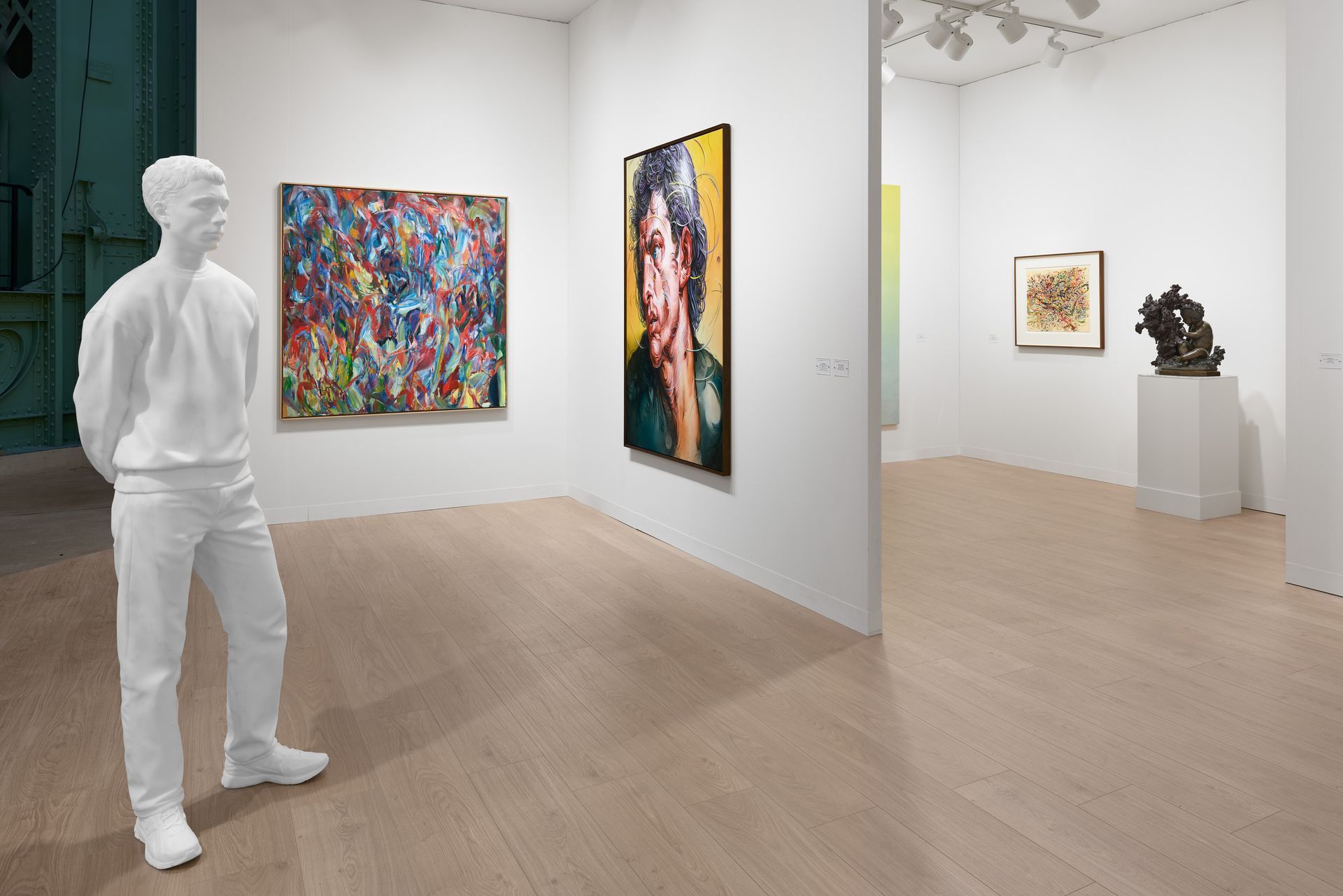
Moritz (painting on the left) looks like the gentlest painter on this list, and the gentleness is a surface effect. Since 2023 she has let female bodies surface from gestural swathes of paint, their contours dissolving as they ebb between pigment and form. Raised in the GDR and long associated with images of history and memory, she now paints figures that never finish arriving. A body that cannot be told apart from the matter around it is the abject feminine at its most seductive: beautiful from across the room, unresolved up close.
7. Stefanie Heinze, Capitain Petzel
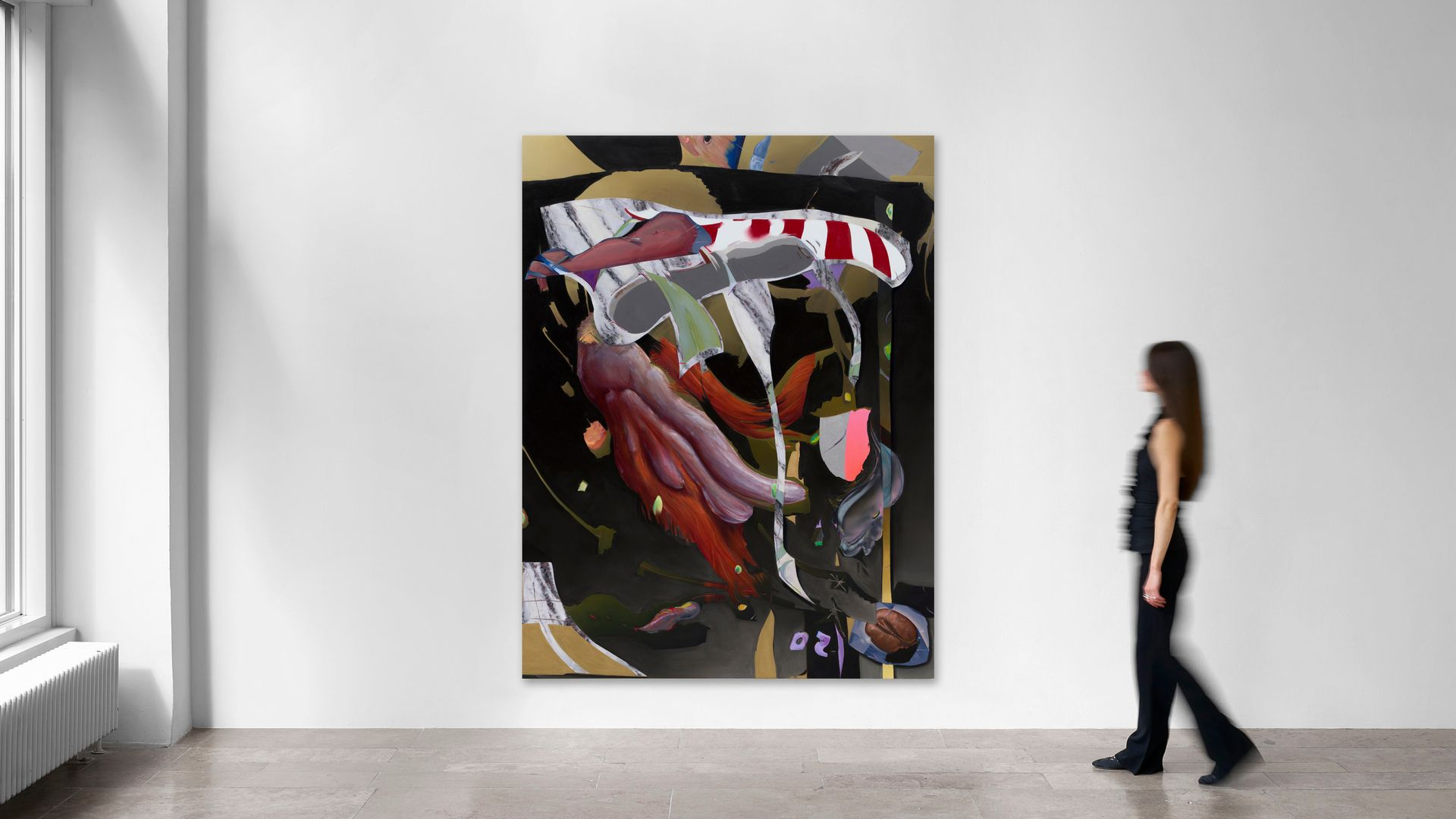
Heinze's painting reads like a diagram of the week.
In Skyward Drift; peer through (2026), a phallic form rises through a translucent ground, partly blocked by a red-and-white warning sign. The form wants out; the weight of marble and the graphic codes of restriction hold it down. Heinze turns the abject feminine around: here the phallic body is the one fenced, contained and labelled, the treatment usually reserved for women's bodies. The barrier itself becomes the subject.
8. Hannah Levy, Casey Kaplan
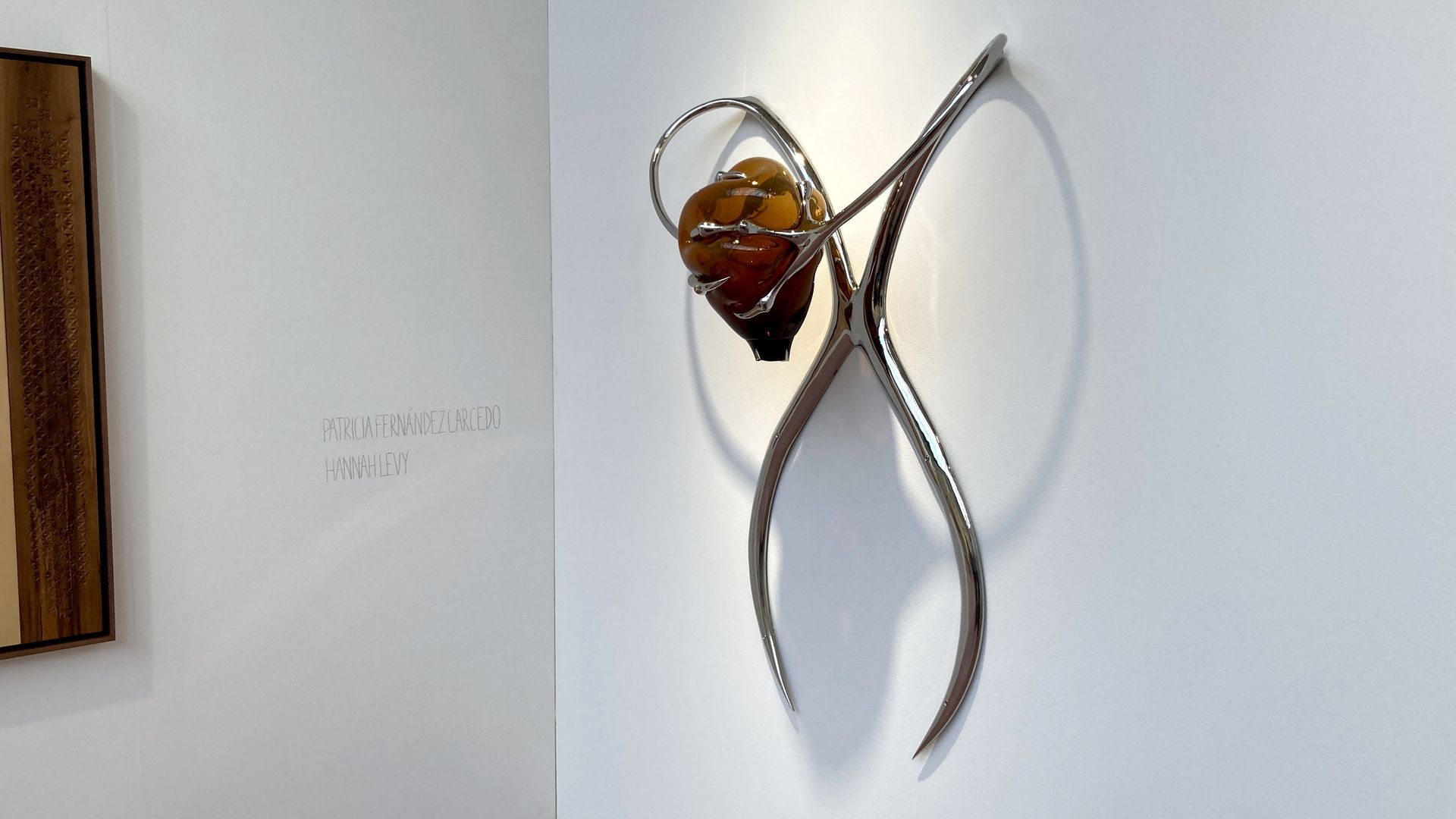
Levy is the only sculptor on this list, and she earns the place. In Untitled (2026), a glossy amber orb of blown glass is held in the grip of stainless steel claws; the glass was blown through them while hot, so the squeeze is permanent. Polished loops spread above and taper into sharp points below, somewhere between an insect, an Art Nouveau sconce and a surgical tool. Her work begins from the moment something soft is stretched or squished, and here that moment never ends. It is the abject feminine as pressure: a body held in place, still bulging against what holds it.
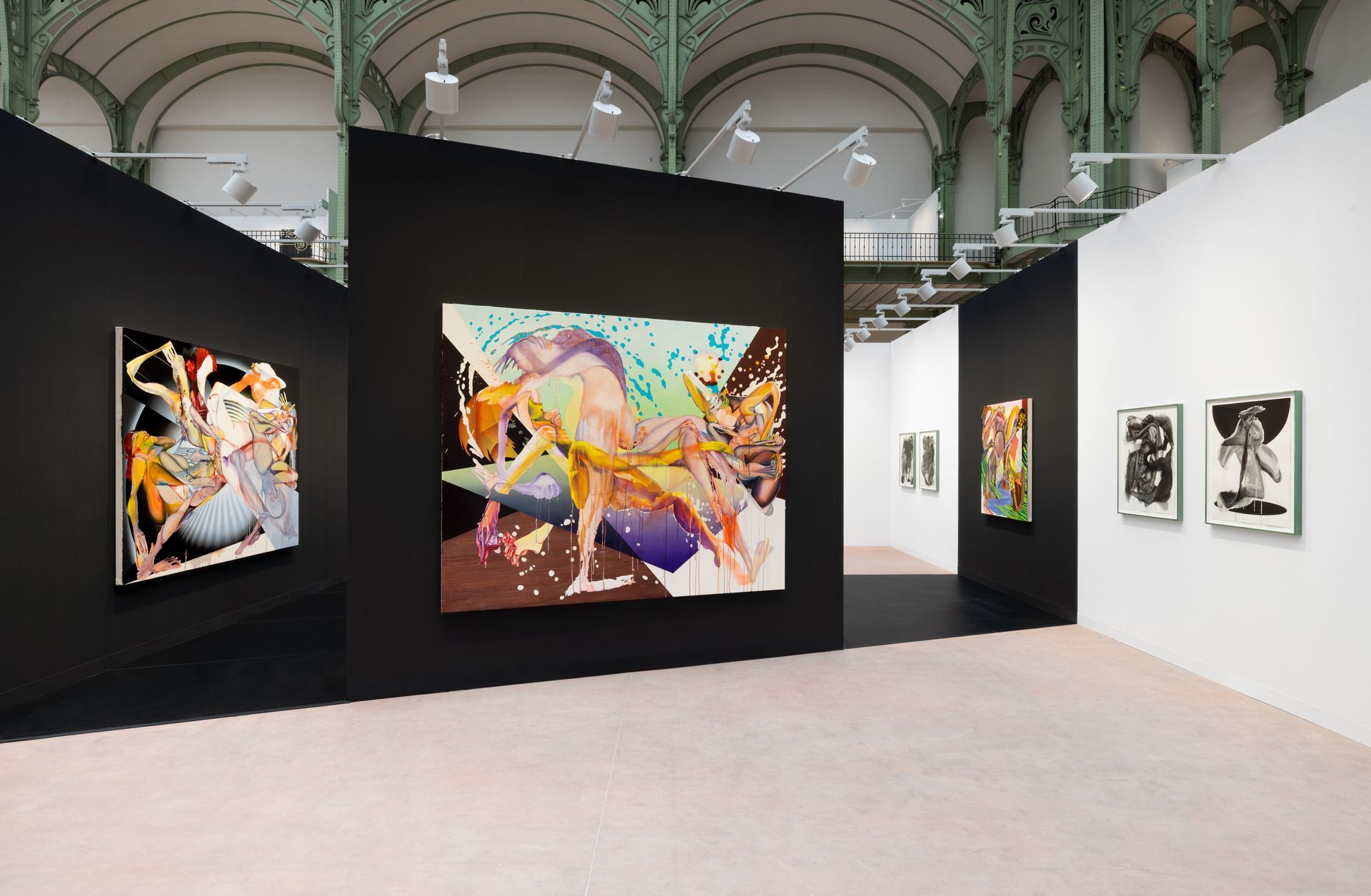
9. Christina Quarles, Pilar Corrias
Quarles gave the most impressive presentation of the fair. She designed her booth as a work in itself, split by a matte black shadow and lit through the Grand Palais skylights. At its centre stood the triptych
Stay Up Late to See the Light/ Stain' Up Late to See Tha Light/ Staid Up Late to See Tha Light
(2026), its panels rearranged every day to reveal a new orientation. Her fragmented, interwoven bodies are the abject feminine at full strength: limbs that belong to no single figure, identities that never settle into one outline. With the fair’s early closure, its weekend configurations were never shown, leaving the work unresolved in a way no one planned.
Nine bodies spilling past their edges, in a week when Paris itself resisted containment. Together they show how far the abject feminine reaches: into folds, debris, dissolving figures and fenced-in forms, wherever a body refuses the shape it was given. That is why art matters more in weeks like this one. When a city is pushed past its limits, the systems built to contain it start to show their seams, and the abject feminine gives those seams a body. Painting slows us down long enough to look at what refuses to settle, in the body and around it.
To see the abject feminine in my own work, visit
my paintings.
References
- Kristeva, J. (1982) Powers of Horror: An Essay on Abjection. Translated by L.S. Roudiez. New York: Columbia University Press, p. 4.