On Duality, Paint, and the Day My Two Countries Went into Conflict
Two Countries, One Body
To the Latinos, I was always
La Gringa. To the Americans, always
the Latina. I grew up in Colorado, born of a father from New York and a mother from Caracas, and I have spent my life in the hyphen between those two things, pushed to one side or the other, never fully claimed by either. My body knew that split before I had language for it: I was born with unilateral breast agenesis, one side developing and one side not, the duality written into my flesh from the beginning. Two sides, never conforming to a single mold, always at odds, always negotiating.
On January 3rd, 2026, the country that made one half of me invaded the country that made the other.
I have been to Caracas twice, once as a teenager and once as a young adult, and each time I felt the pull of something that was mine but resisted easy naming. It is a city of extraordinary energy, chaotic and alive, perched in a valley ringed by mountains so green they look invented. The
naturaleza of the country, its forests, its coastline, its particular quality of light, is some of the most overwhelming I have encountered anywhere.
And then I couldn't go back. For fifteen years, the political conditions and the accelerating deterioration of daily life have made return impossible. Venezuela is a country I carry inside me that I can no longer reach.
The deterioration didn't begin with one event. For over twenty-five years Venezuela has been caught in a slow unraveling: economic collapse, hyperinflation, mass exodus, political prisoners, shortages of food and medicine. More than six million people have fled. My family stayed. When I think about the weight of that erosion, the invasion of January 3rd lands not as a singular rupture but as one more intensification of a crisis with no clear horizon. It brings a complicated kind of hope and it brings new fear. The name of this intervention was Operation Absolute Resolve. For the people it was enacted upon, nothing has resolved. As of this day, the operation has seemingly concluded; the situation has not.
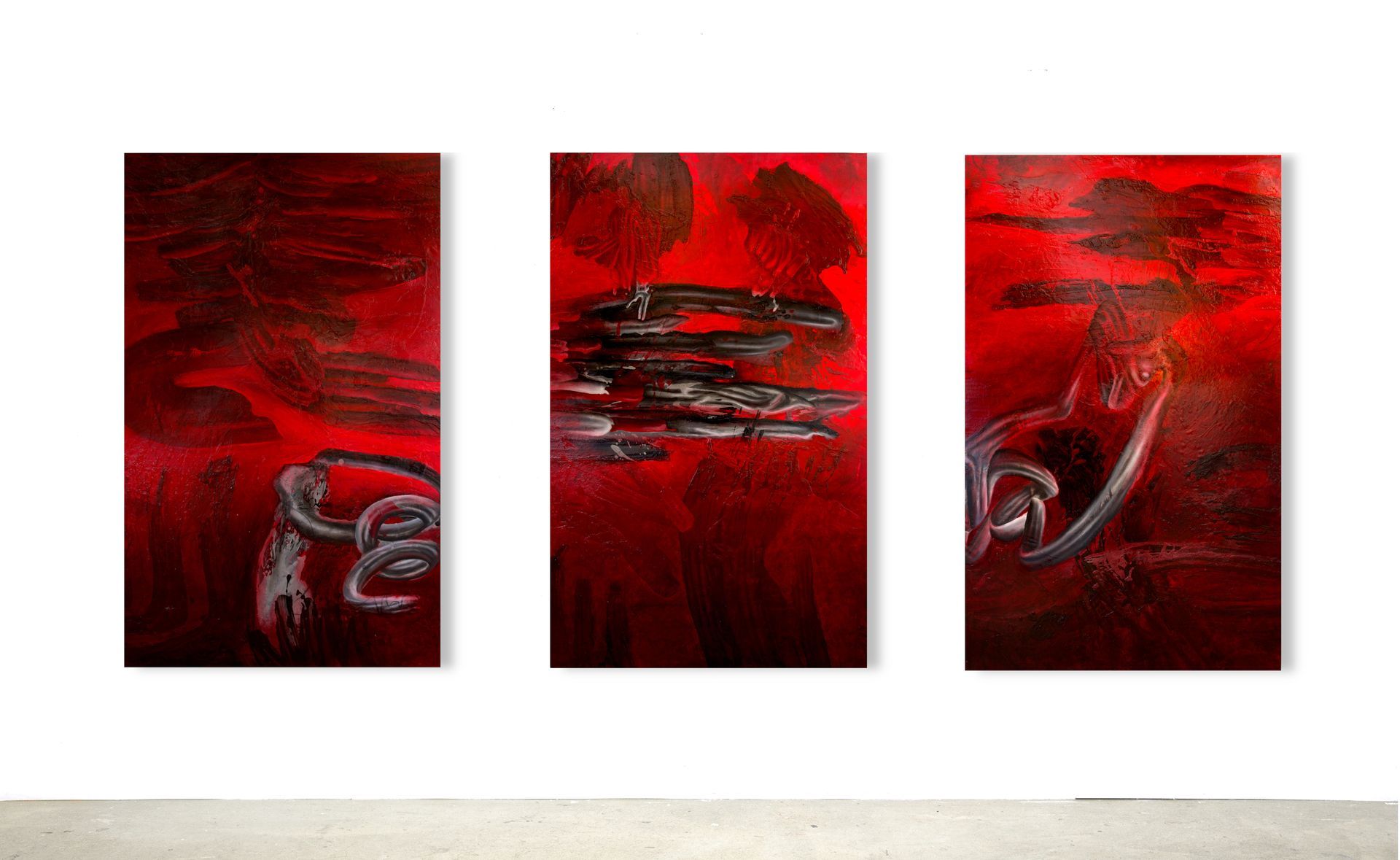
The triptych comes from that suspended place. Not from a political position. From a bodily one. I am made of both countries, they are in conflict, watching from an art studio in France, my family in a city I have not been able to reach for fifteen years. The hyphen I have always lived in just got wider.
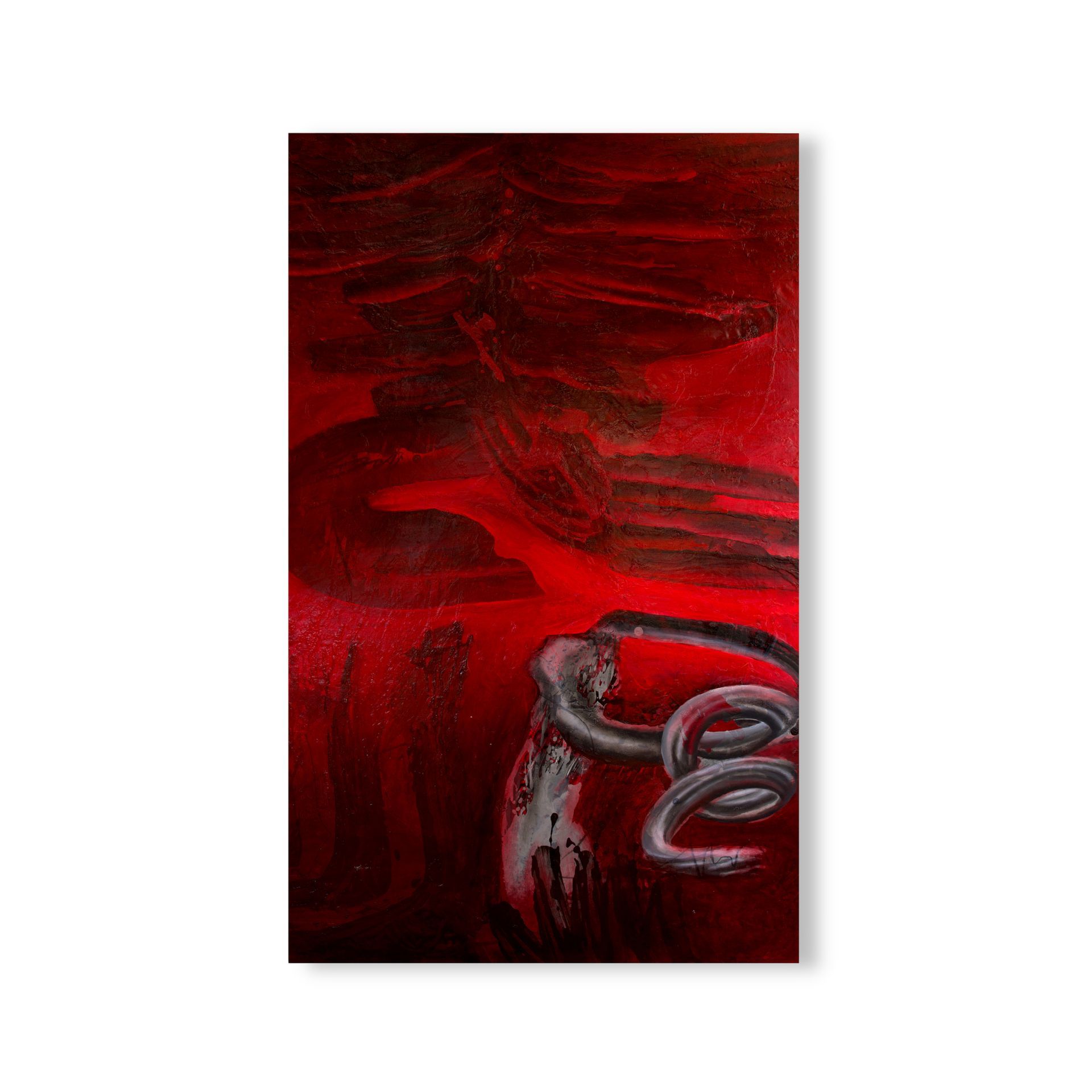
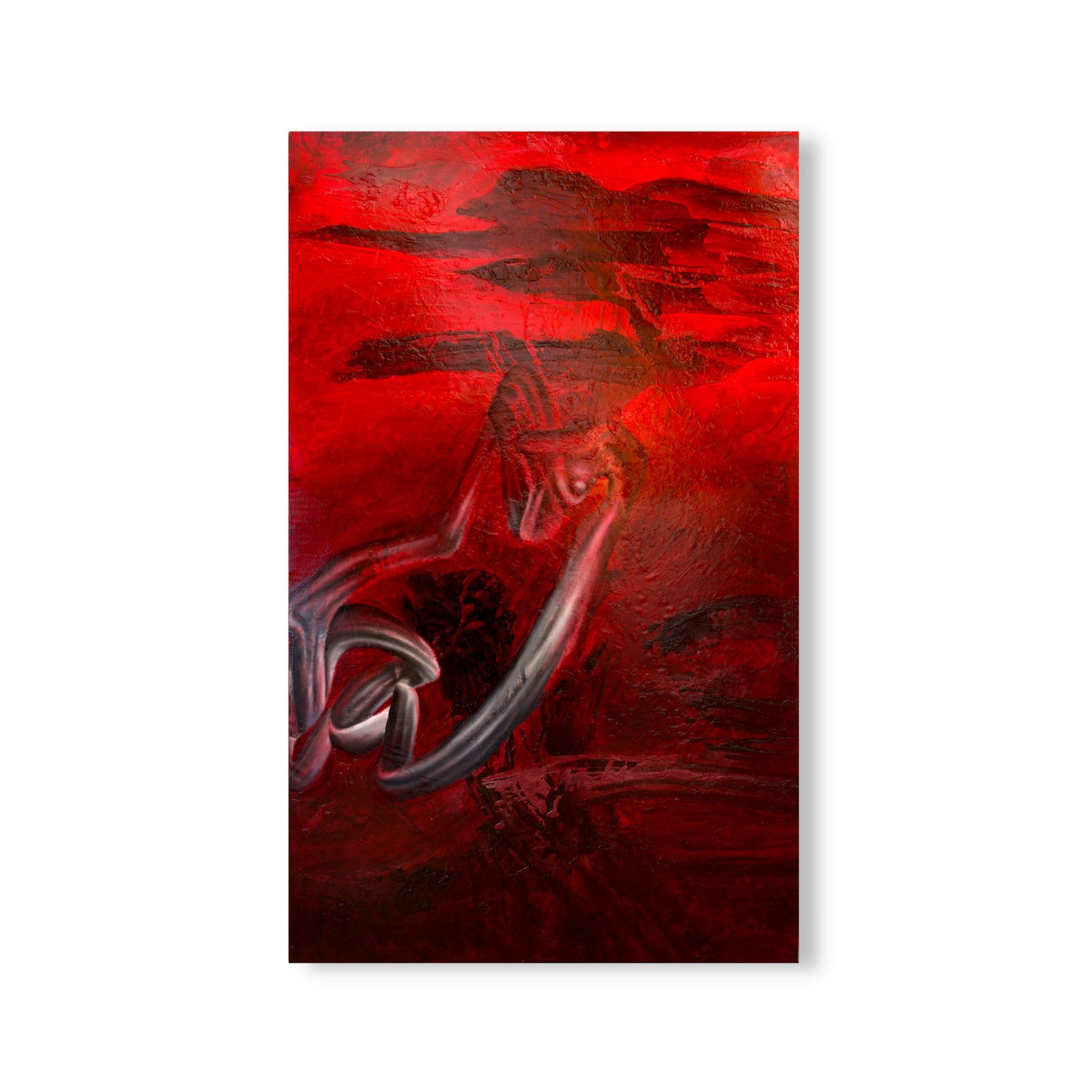
I. 02:00h — Blackout
Oil and acrylic paint on canvas, 130x80cm
The operation began around 2 a.m. local time. The first thing it did was take the light. Infrastructure strikes, substations hit, communications towers targeted, the city's nervous system dismantled before anything else. Parts of Caracas went dark. As the helicopters came in low over the Caribbean, flying at a hundred feet above the water, the city that was their destination could not see them coming.
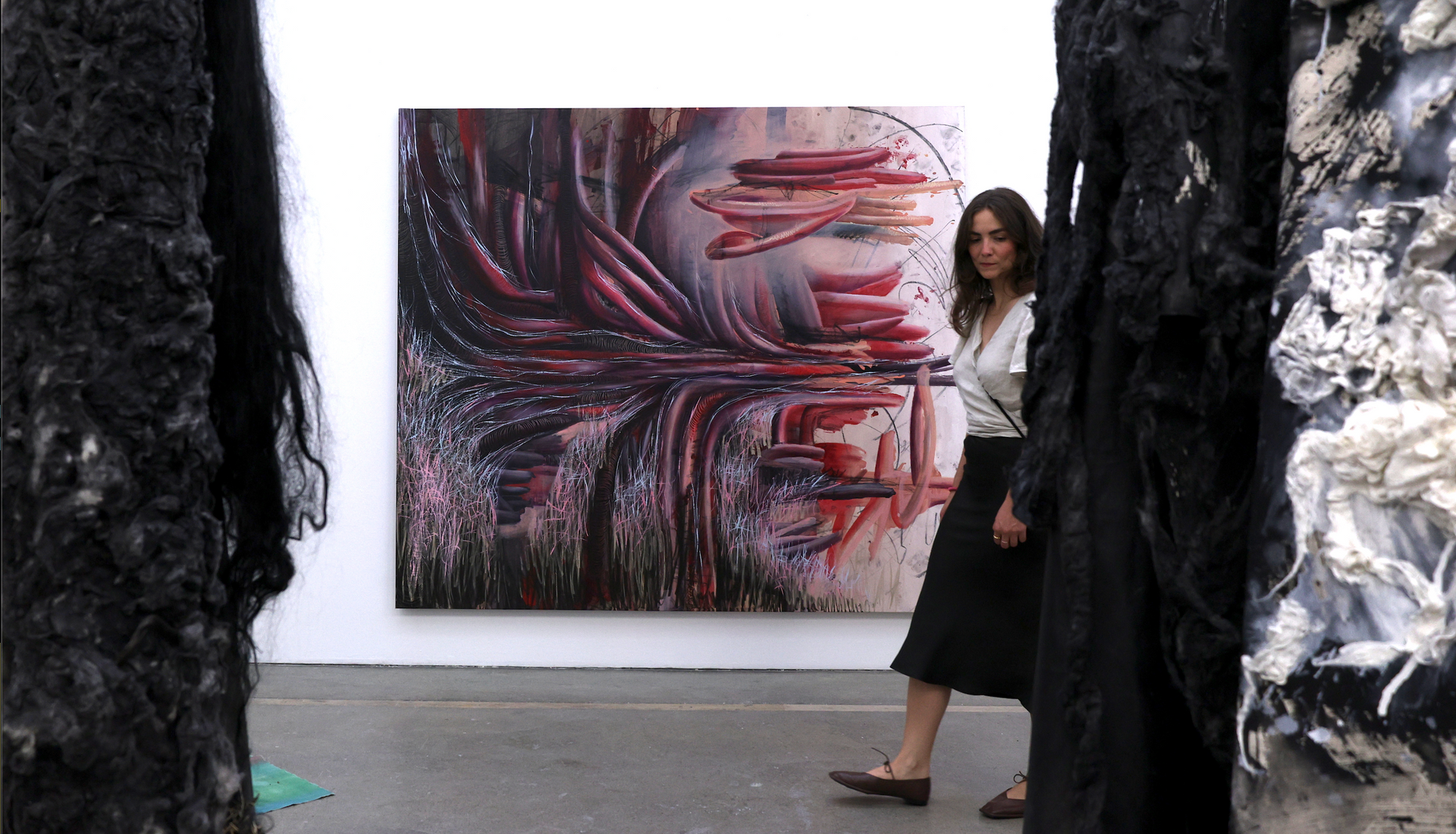
The first canvas is all of that: a sky pressing down, turbulent horizontal forms in black scored deep into red, the atmosphere itself becoming threat. Something massive gathers in the upper register, not yet arrived but crossing toward, looming from above. Below it, a coiling metallic form, quiet and tight, like a signal that has just gone dead. The red and the black do not negotiate. One presses into the other, neither yielding, each insisting on its own weight.
The city has gone dark. The painting goes dark with it.
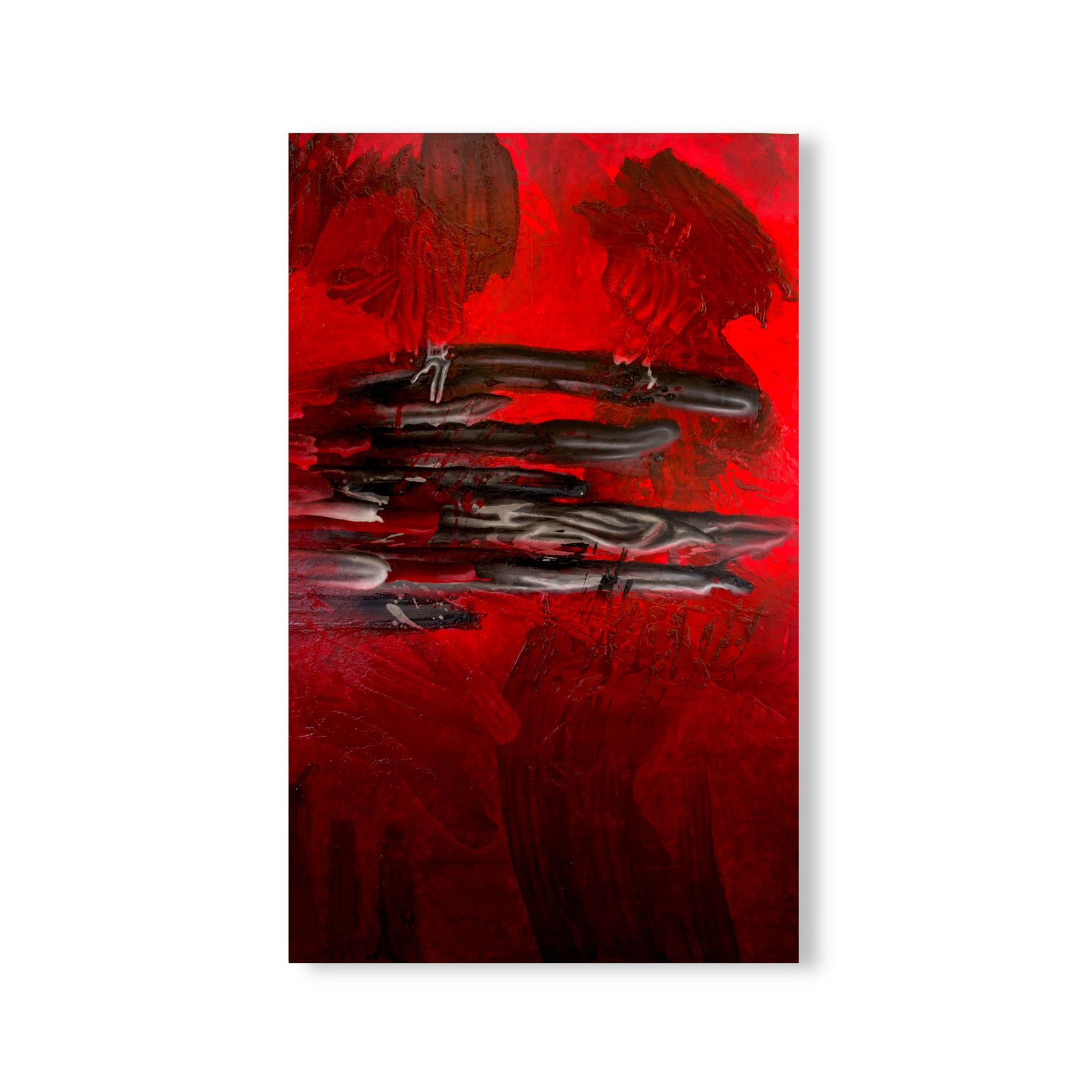
II. 02:30h — Urban Combat
Oil and acrylic paint on canvas, 130x80cm
Then the force hit ground. There was combat. People were killed, the numbers disputed, the fog of that hour still not fully cleared.
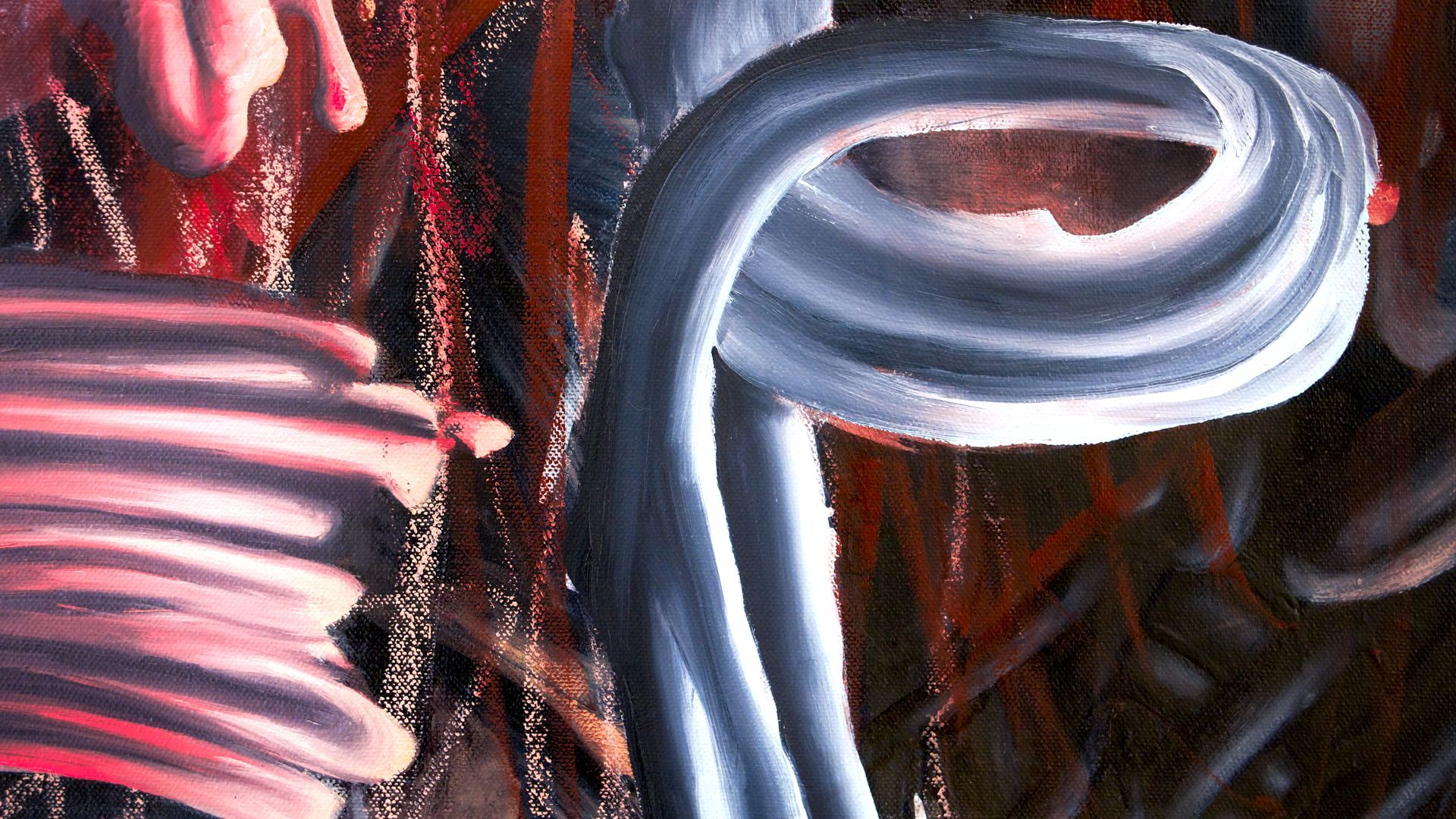
Two dense swirling forms occupy the upper register of the second canvas, enveloped by the red atmosphere, turning against or into each other — two bodies that cannot separate and cannot merge. I know something about that. Across the center, horizontal grey forms tear through the composition, grey like metallic arms, like instruments of war, each one dense and purposeful and blunt. Paul Virilio wrote about the violence of speed, about how modern war operates not through occupation but through the sudden collapse of distance, the erasure of the gap between here and there. The second canvas is that moment. The grey carries the weight of machinery. The red does not yield. They coexist without resolution, pressing into each other across the surface, two forces with no common language, only contact.
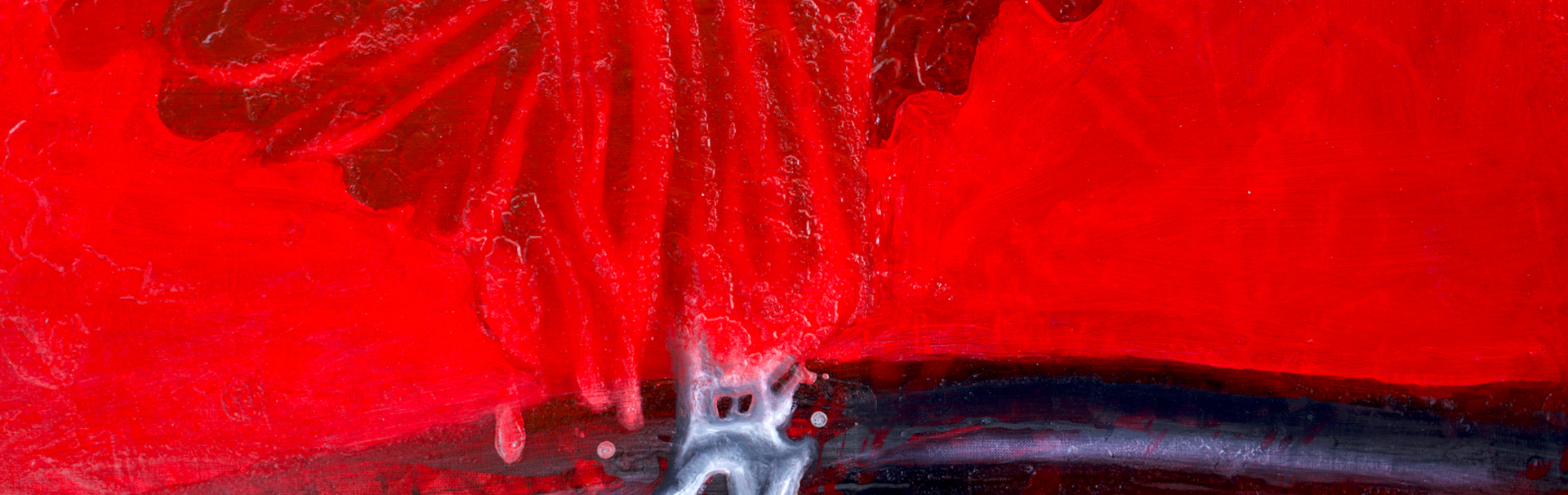
III. 03:30h — Extraction
Oil and acrylic paint on canvas, 130x80cm
In the hours before dawn, the operation's primary target was seized and flown out of the country. By the time most of the world woke up it was already done. Something fixed in place for decades, suddenly removed. The official word for it was
extraction.
The third canvas arrived with that knowledge already inside it. The red deepens here, more burgundy, more interior, the color of something turning inward. A form emerges from the center, ambiguous and urgent, surrounded by the familiar turbulent strata but with a vertical pull running through the composition now, a tug upward and away. The metallic gray forms return from the first canvas, longer this time, more knotted, more insistent. Extraction as the organizing force: what is being removed, what the removal costs, what is left in the space it occupied. The painting does not answer. It holds the shape of the question.
As does the morning after. As does every morning since.
On the Body of a City
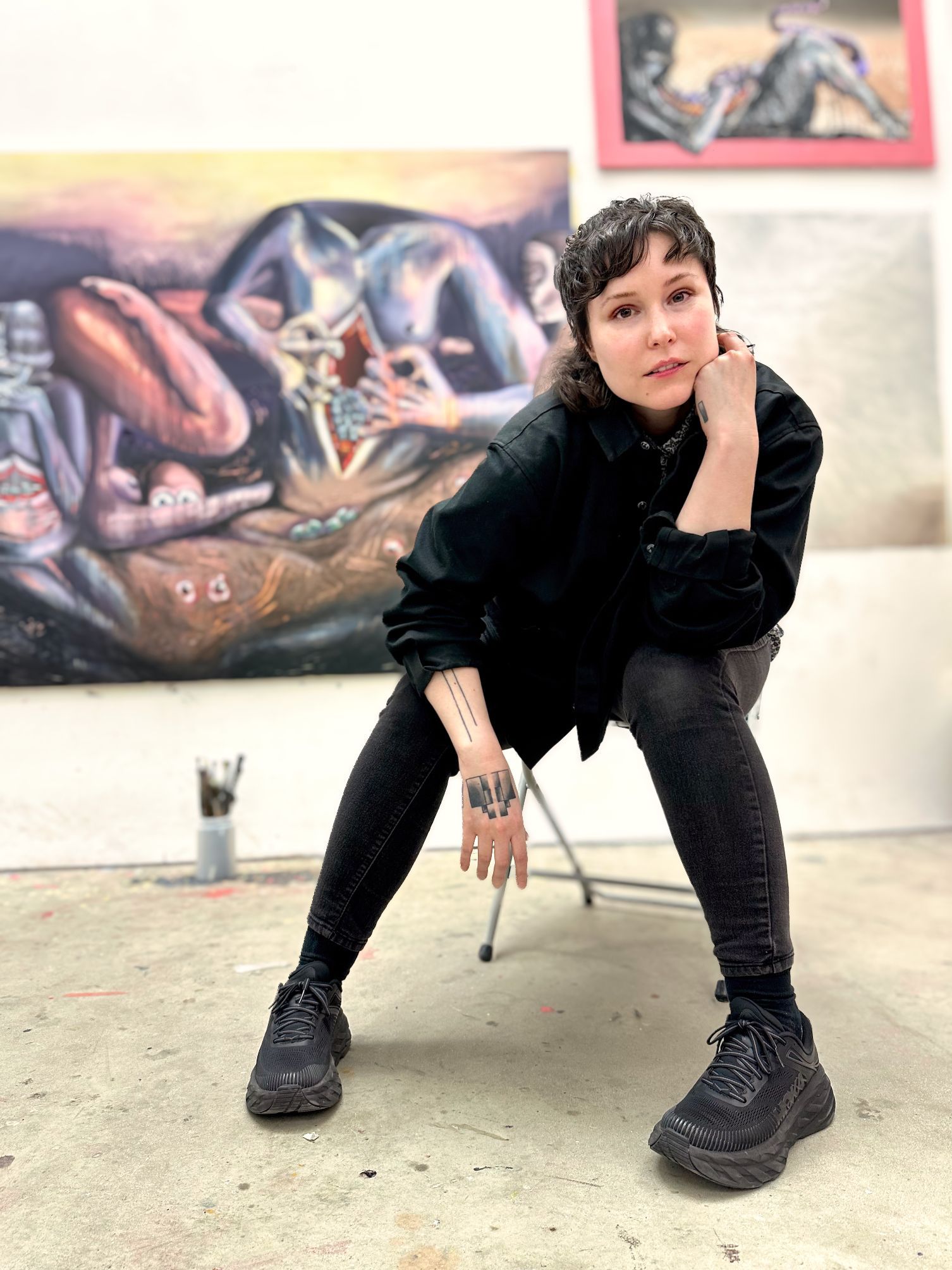
My practice usually works close to the individual body. The visceral interior, the terrain of surgery, the
abject feminine.
Caracas is a departure in scale: a city, a country, something collective and political. But the underlying logic is the same, because violence done to a city lands in the body the way all violence does. For me it arrived as something felt in my extended body, in my
raíces, in the living and ancestral extensions of myself that are my family and my mother and the people I love who are still there. I sit at a distance and feel it as something proximate. That has always been the condition: close to something I cannot fully hold, belonging to something that will not fully claim me.
My body knew this before any of it had a name. The unilateral breast agenesis I was born with, one side and then the other, was the first form this duality took. What the invasion did was take that private negotiation and place it on the world's stage. The two halves of me are now, literally and geopolitically, at war. These are not separate registers of the same feeling. They are the same thing, at different scales, all the way down.
Deleuze and Guattari wrote about deterritorialization, the process by which a body or a people is stripped of its grounding, uprooted from the earth that gives it coherence. Venezuela has been living through that process for decades. The invasion is not the beginning of that unraveling. It is a new chapter in a story already more than twenty-five years old. And I have been living my own version of that logic my entire life: two territories, two sides, a ground that keeps shifting beneath the question of where you belong.
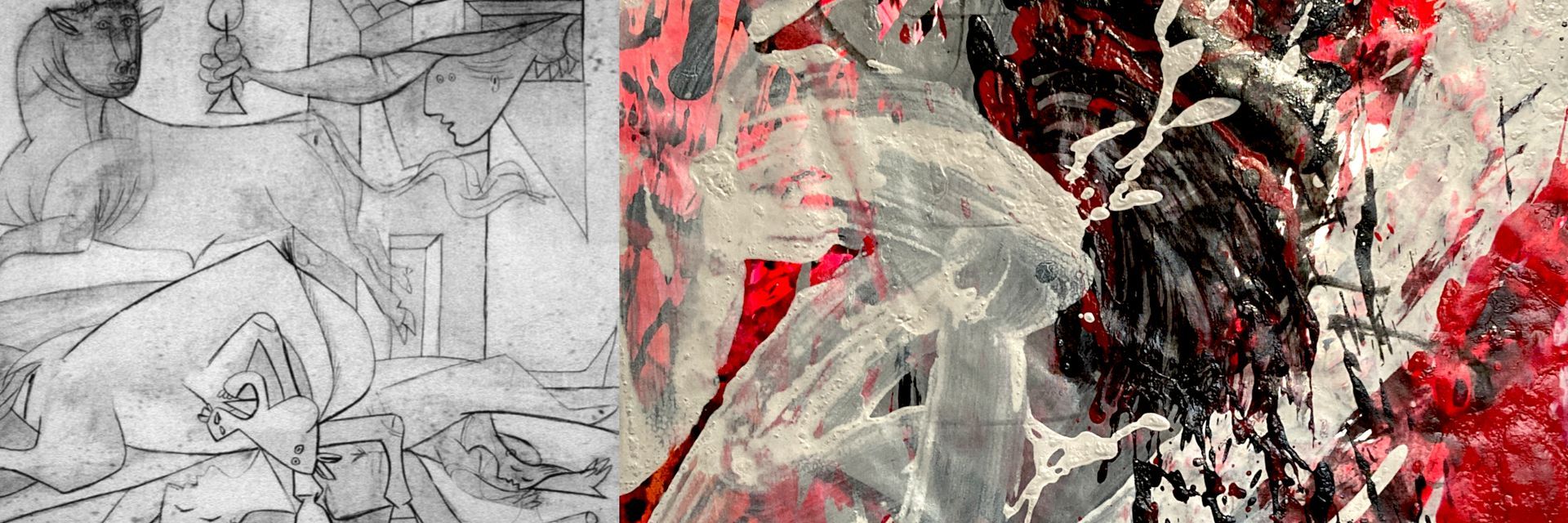
Picasso's
Guernica & Drona's Caracas
Picasso called his painting
Guernica. Not
The Bombing or The War in Spain, just the name of the town, made to hold everything. I followed that instinct with Caracas, knowing the comparison it would invite.
The differences matter as much as the echo.
Guernica was built through obsessive control, heaps of preparatory sketches, forms mastered and refined toward a monumental image. An external witness constructing the right shape for horror. Caracas came from somewhere else entirely — not constructed but carried. It is in my muscles, my ancestry, my DNA. The two countries that made this conflict made me first. I did not need to sketch my way toward the truth of it. I only needed to open to what the body already knew.
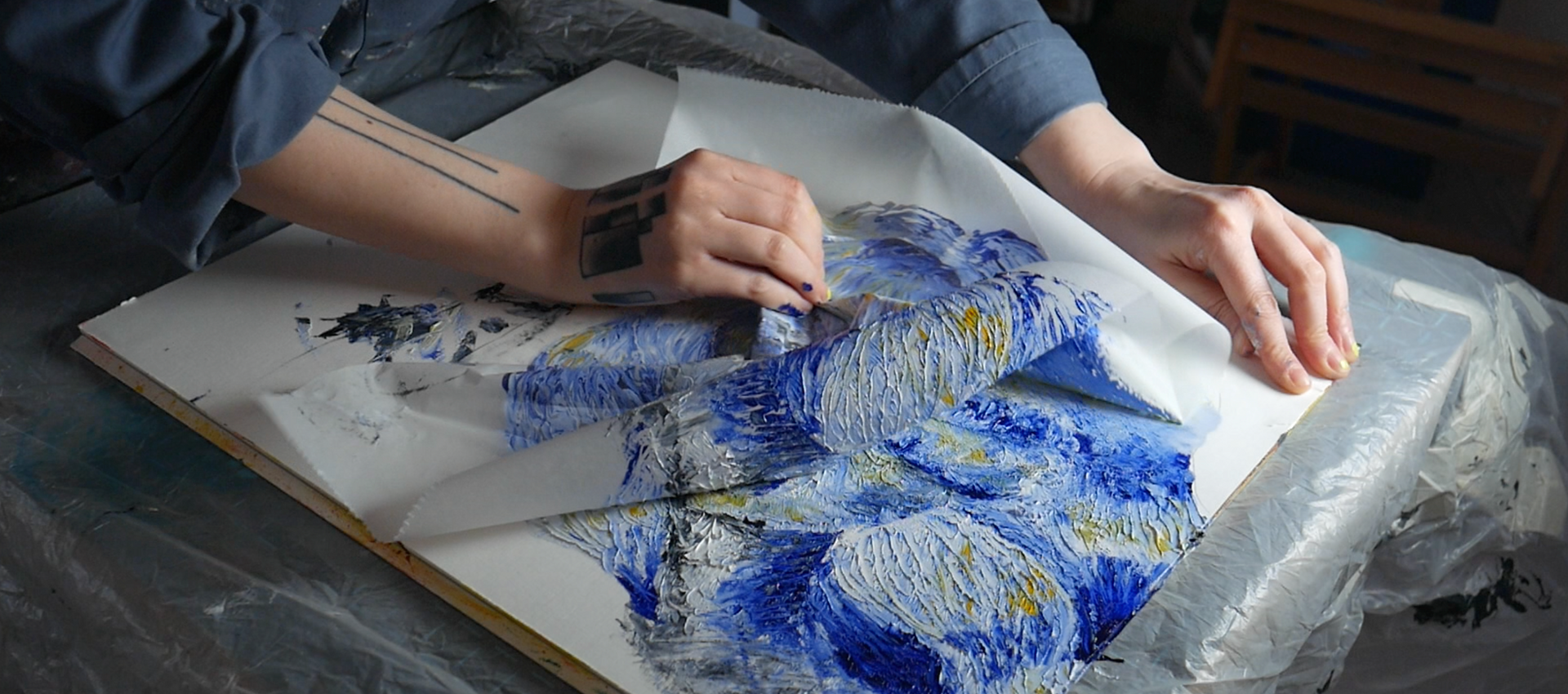
The canvases go down before they go up, the body moving above the surface without frontal confrontation, gesture preceding intention. What comes through in that state is not planned: it is what the body already carries. The somatic memory of painting, the muscle memory that does not need to think in order to know. But more than technique: the ancestral memory that lives in the body as something physical and present, the
raíces that are not metaphor but matter. When I lay open to the canvas I am opening to what has already been given to me by the people I come from, trusting both sides of what I carry to move through the work together. The asymmetry is not a problem to solve. It is the material.
A body that has always been two things built this. Not a monument. A record.
Picasso sketched until he got it right. I lay the canvas on the floor, open to what is already in me, and leave the marks it makes.
The Minute Mark
The triptych is structured by time because time was the only honest structure available. Not geography, not judgment. The minute-mark: 02:00h, when the lights went out. 02:30h, when the force hit ground. 03:30h, when something was taken and the sky over Caracas was already beginning to lighten.
I am made of two countries that are now in open conflict with each other. That conflict is not new to my body. Caracas is what it felt like when it became visible to the world.
If you liked this article and want to read more deep dives into the work, check out the
blog, or check out this blog article exploring
Madame Sidewalk: Contemporary Painting at the Collision of Body and City.