Installation week, curation, and lessons from the Royal College of Art MA Painting degree show.
Woven throughout the Royal College of Art Masters in Painting program is one looming, much-discussed event: the degree show. You hear about it from day one, and by the time it arrives, it has taken on a near-mythical status.
And for good reason.
The Royal College of Art MA Painting Degree Show attracts more than its fair share of art world players. Curators, small and mid-sized galleries, the occasional blue chip heavyweight, international ambassadors, and in my year (2025), even royalty. No pressure.
The Reality of Installation (Plans Will Die)
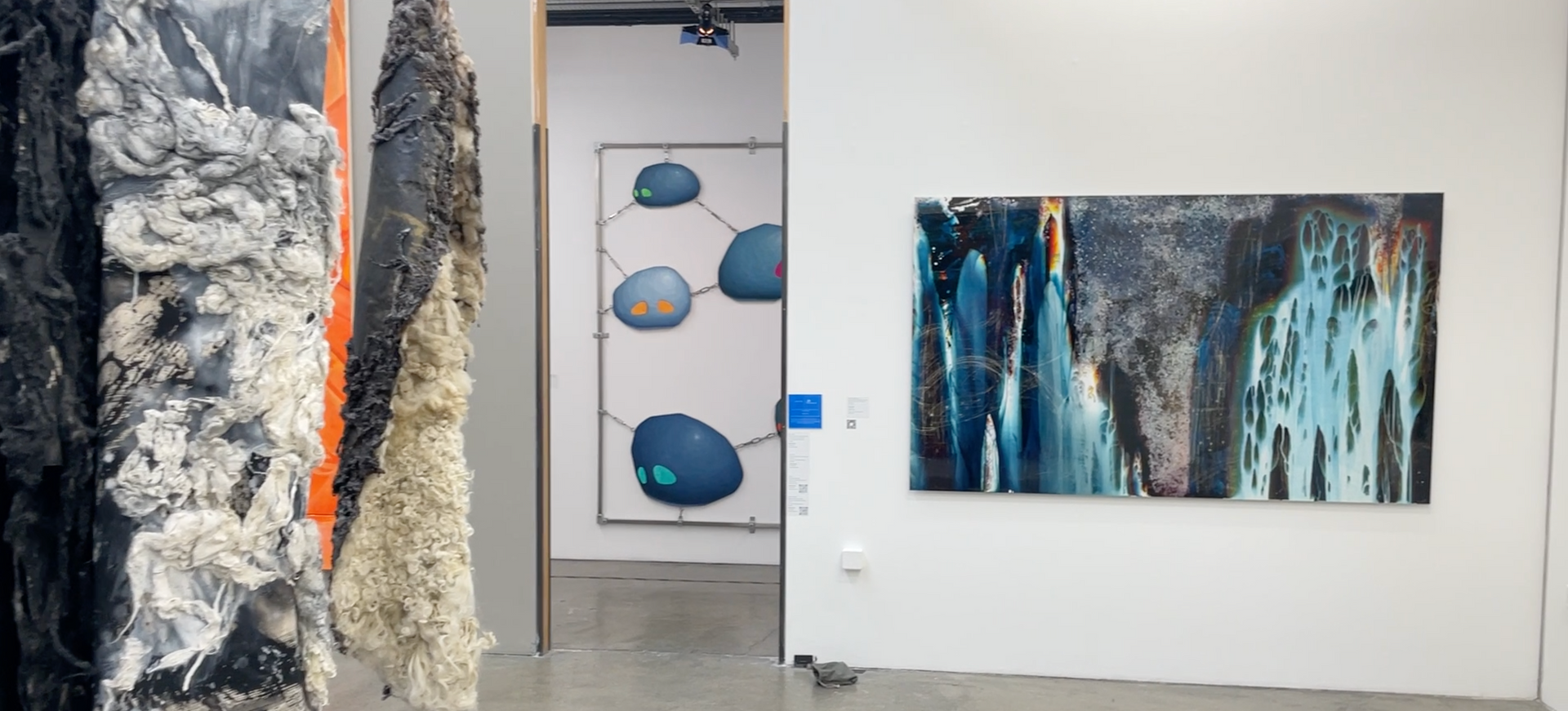
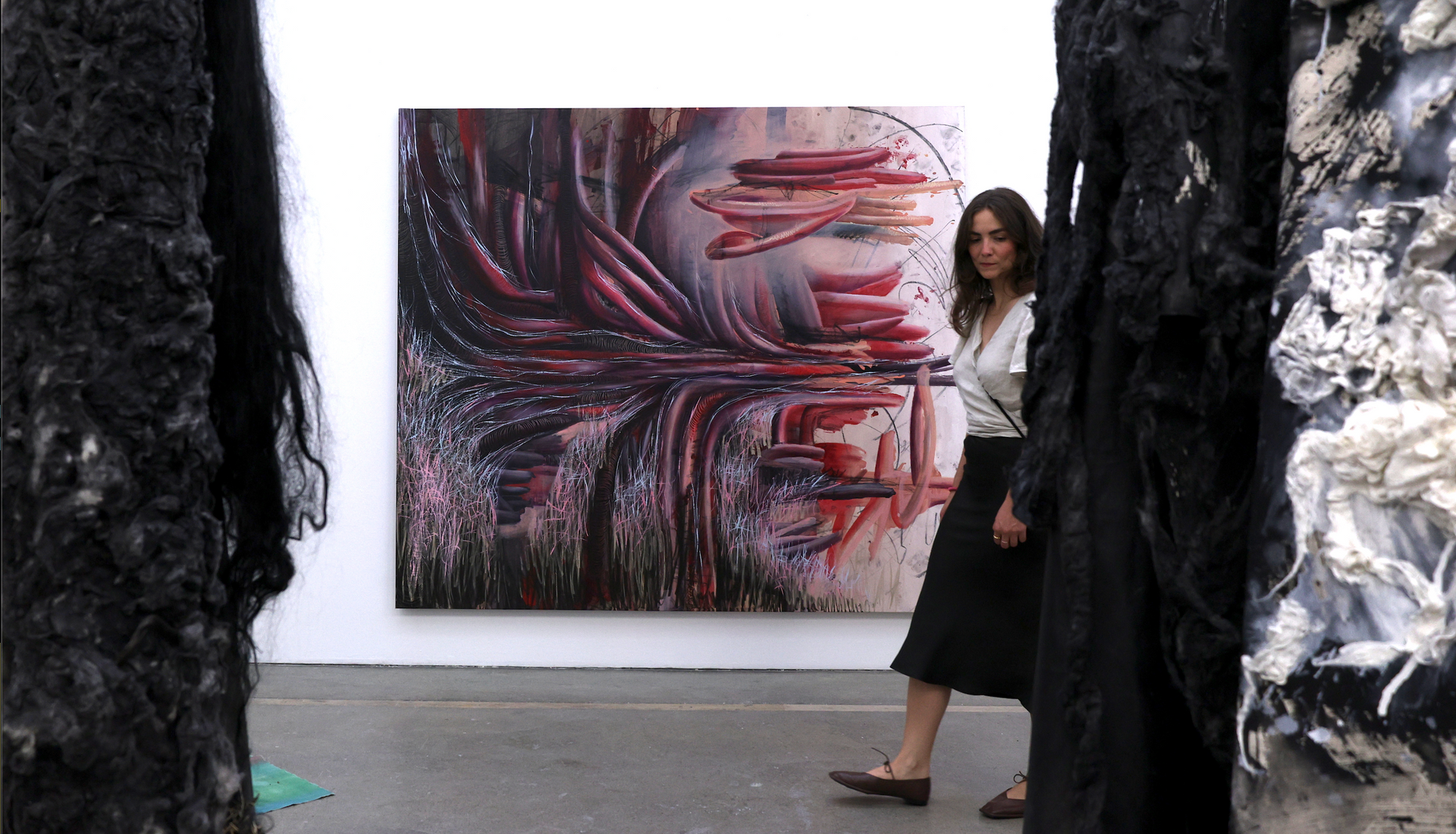
During my year, the show was installed in the Painting Building, with students organized into rooms. Many groups self-organized early and discussed curation before installation day one.
Whether they did or didn’t, here’s the truth: everything goes out the window on the day.
Students are asked to curate themselves at first. This is intentional. Group curating is a learning exercise, but it is also where things get spicy. Put 150+ ambitious, talented painters into a competitive environment and conflict is not just likely, it is guaranteed. Honestly, I found it to be one of the most useful learning experiences of the entire program.
You learn fast how to roll with it.
If I had to boil my survival advice down, it would be this:
- Have a strong backup painting you would genuinely be okay showing. Several students had to swap works to achieve a more harmonious room hang.
- Arrive with options A, B, C, and D for placement in your assigned room. Visitors remember a well-curated room, not one strong painting fighting a bad hang. First impressions matter.
- Be prepared to let go of your group’s plan. Tutors may change things right before final install. Deep breaths.
- Show up every day of the degree show. You do not need to guard your painting like a museum artifact, but being present somewhere in the building, watching, listening, and learning is invaluable.
- Take your vitamins. Sleep. Seriously. Getting sick during the show is a special kind of tragedy.
- Be kind. Your cohort is your long-term community. The degree show is where you learn who you might want to collaborate with later.
- Be forgiving. Stress does strange things to people. Side-step bad vibes when you can, stand up for yourself when needed, and stick close to those who keep things constructive.
In my year, the installation decisions landed in the end, so trust the process, a sentence that becomes a mantra during installation week.
The Feedback Loop (and Why It Matters)
Students genuinely welcomed the exposure. The Head of Painting Programme did an incredible job bringing in people who could speak critically and thoughtfully about the work.
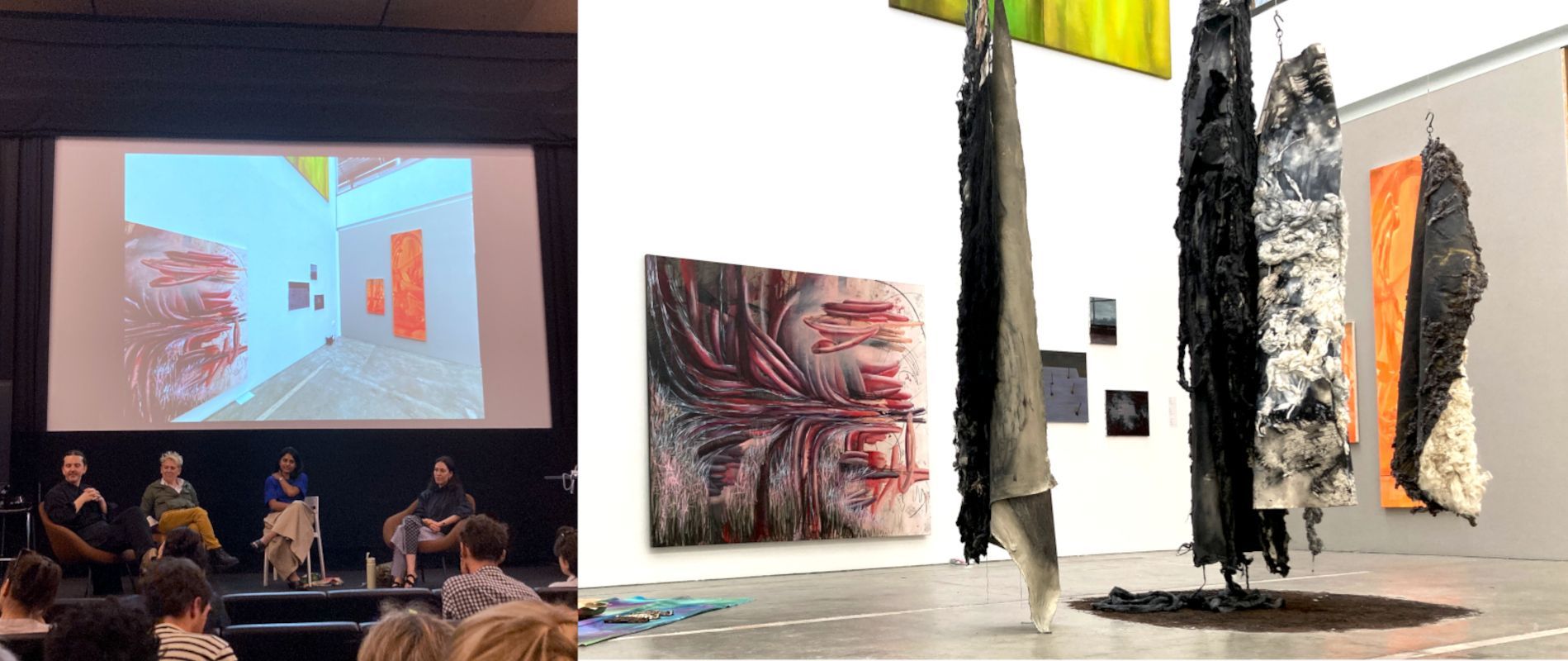
After installation and before opening, art world visitors were invited to view the show privately. This was followed by a panel discussion where they shared feedback on the hang and reflected on the cohort as a whole. It helped us understand how the show might land with the public and how our work sat within a broader contemporary context.
On a personal level, it was also a moment to pause. To acknowledge the work we had just installed, mark the transition, and mentally prepare for opening day.
During the Show: Overwhelm, Then Momentum
Once the show opened, all bets were off.
The footfall was huge. The energy was intense. At first, it is overwhelming, but it quickly becomes an incredible opportunity to talk about your work, test different ways of explaining it, and see what actually resonates.
I loved this part.
I had spent the year agonizing over my artist statement. What to include, what to cut, what felt too personal or embarrassing. Over the course of the show, through dozens of conversations, I got my answers. Interestingly, the parts I had been most hesitant to share were often the ones people connected with most.
That does not mean public opinion should dictate how you speak about your work. But paying attention, really paying attention, can tell you a lot.
Going Beyond the “Typical” Degree Show
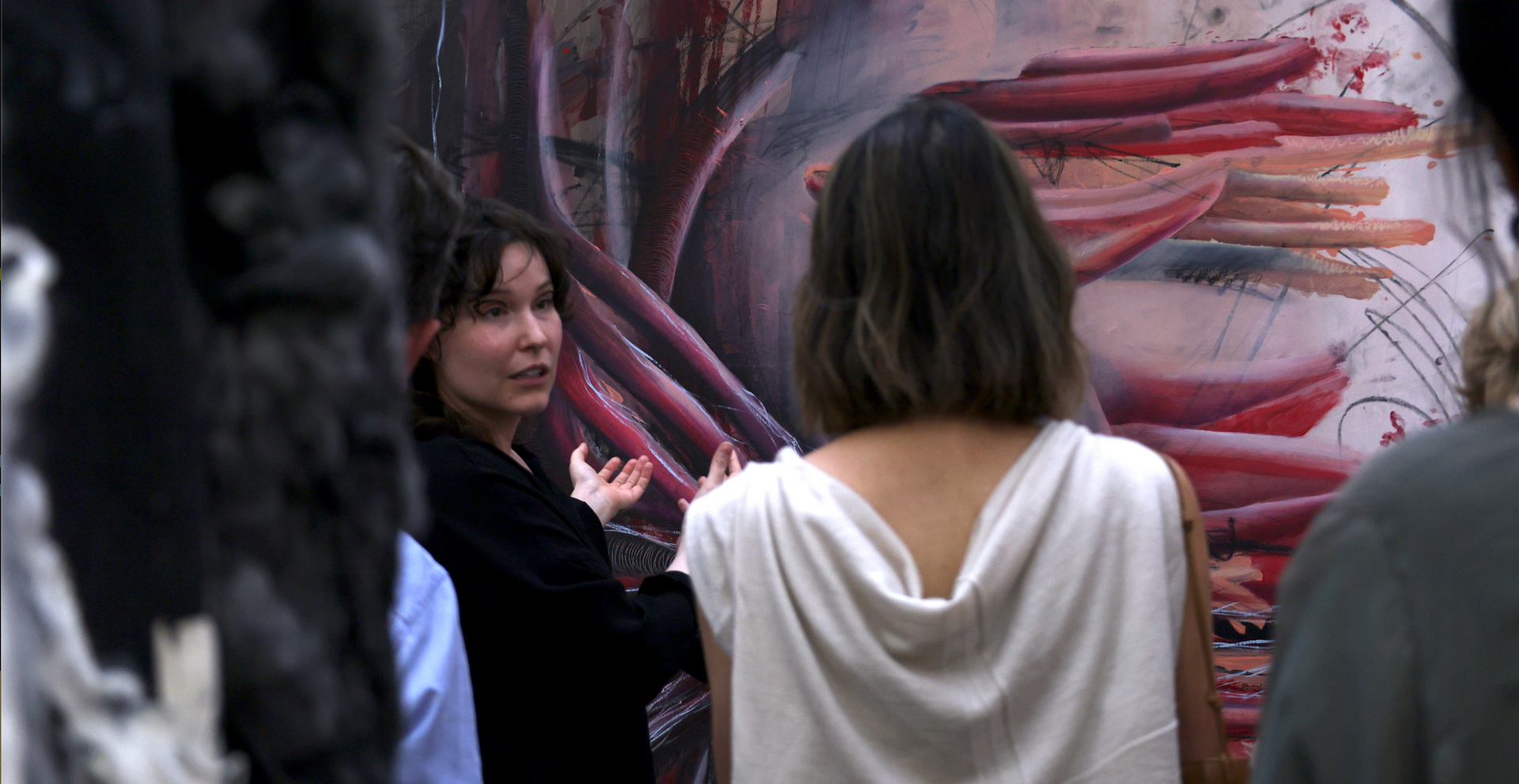
Each morning, the Head of Programme led VIP tours before opening hours. In the quiet, guided context, invited art world guests could engage deeply with the work. This was another example of how the RCA program consistently goes beyond the baseline expectations of a degree show, and why its reputation holds.
After the show closed, tutors organized a final lecture and panel reviewing the installation, sharing professional documentation, and reflecting on the exhibition as a whole. It was a generous way to close the chapter. Acknowledging what had been accomplished while gently shifting our focus toward what comes next.
Because after the degree show, the real work begins.
If you’re curious, I’ve also written a separate piece reflecting on the
RCA MA Painting program
as a whole, and you can see my latest paintings post-RCA on Instagram
@laladronaofficial.